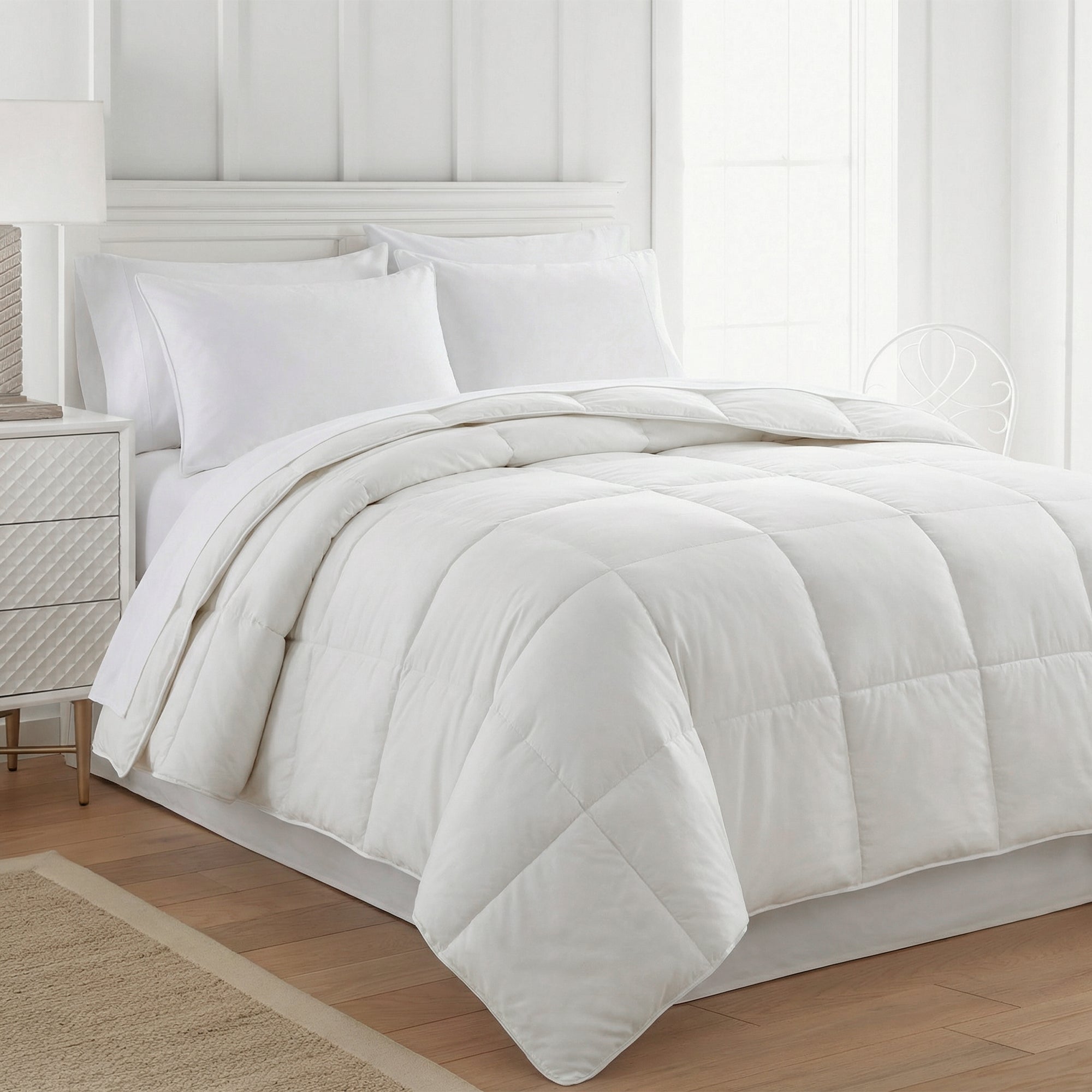
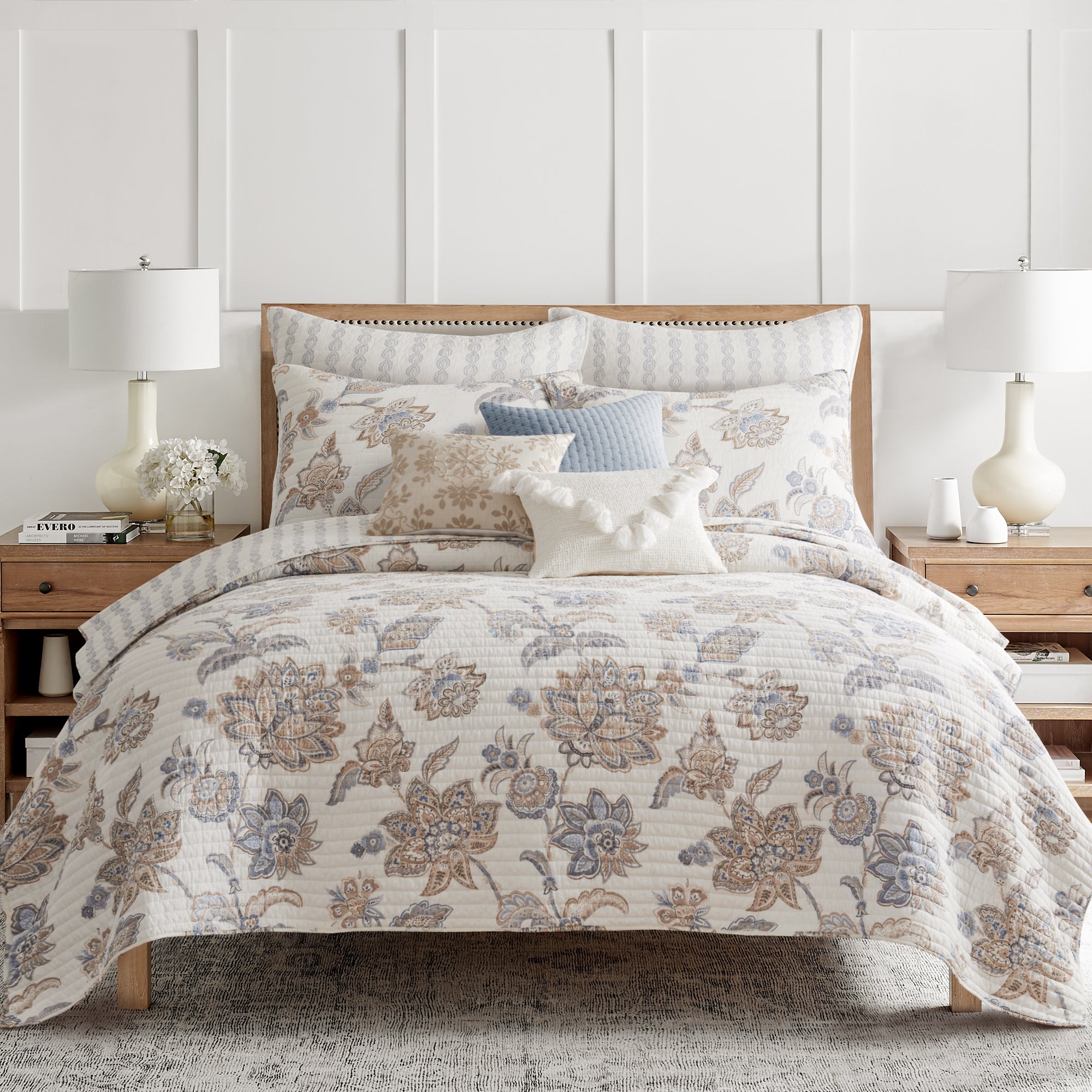
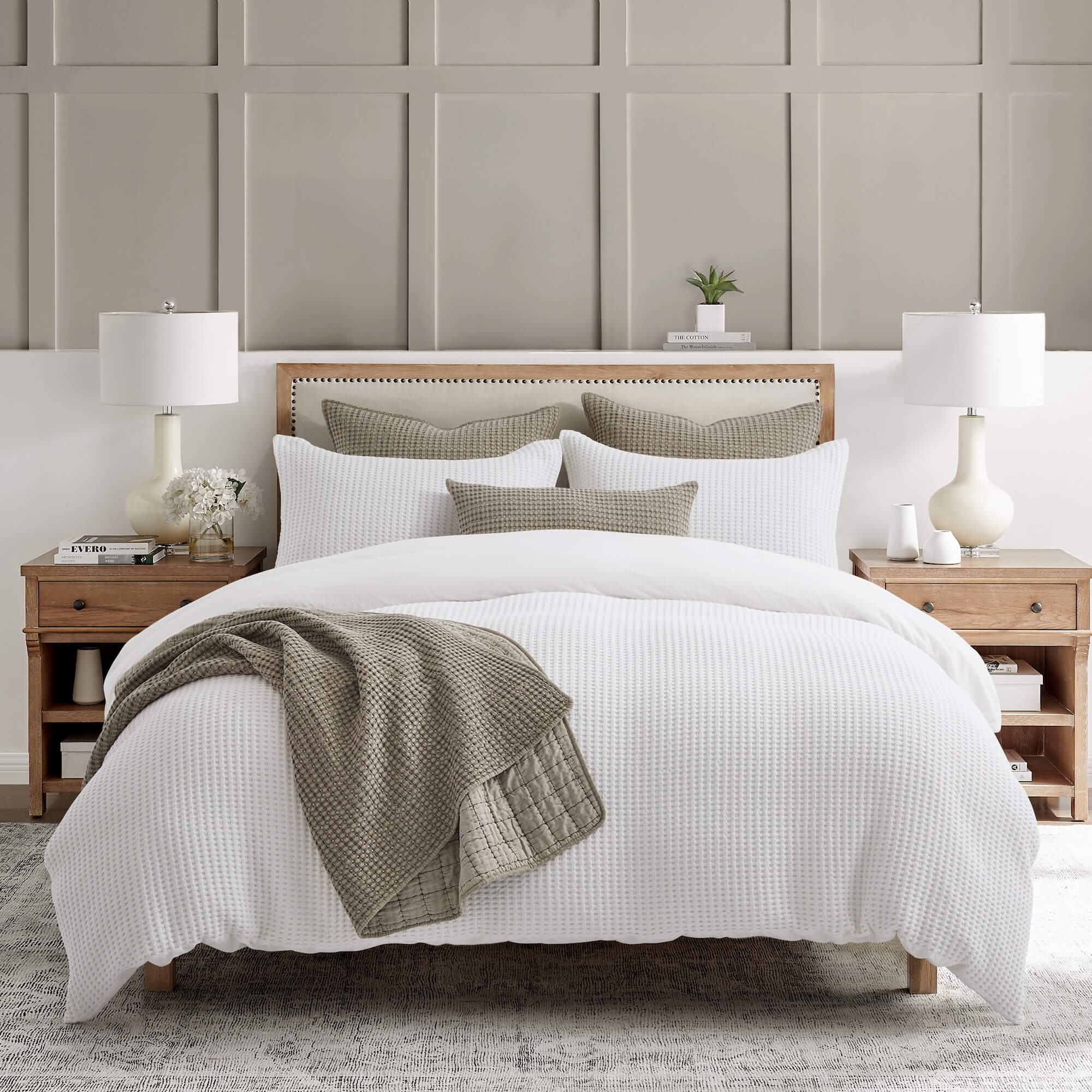
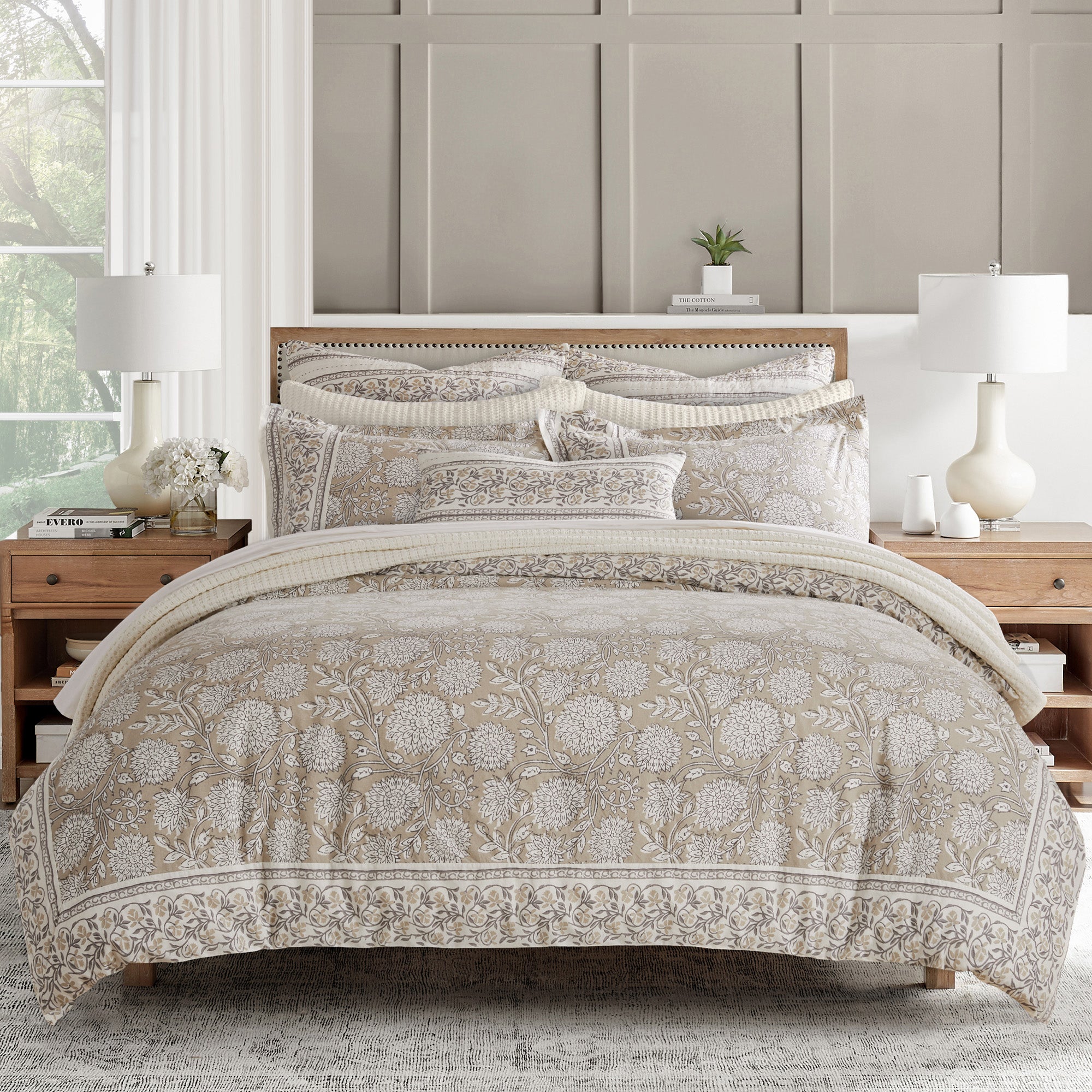
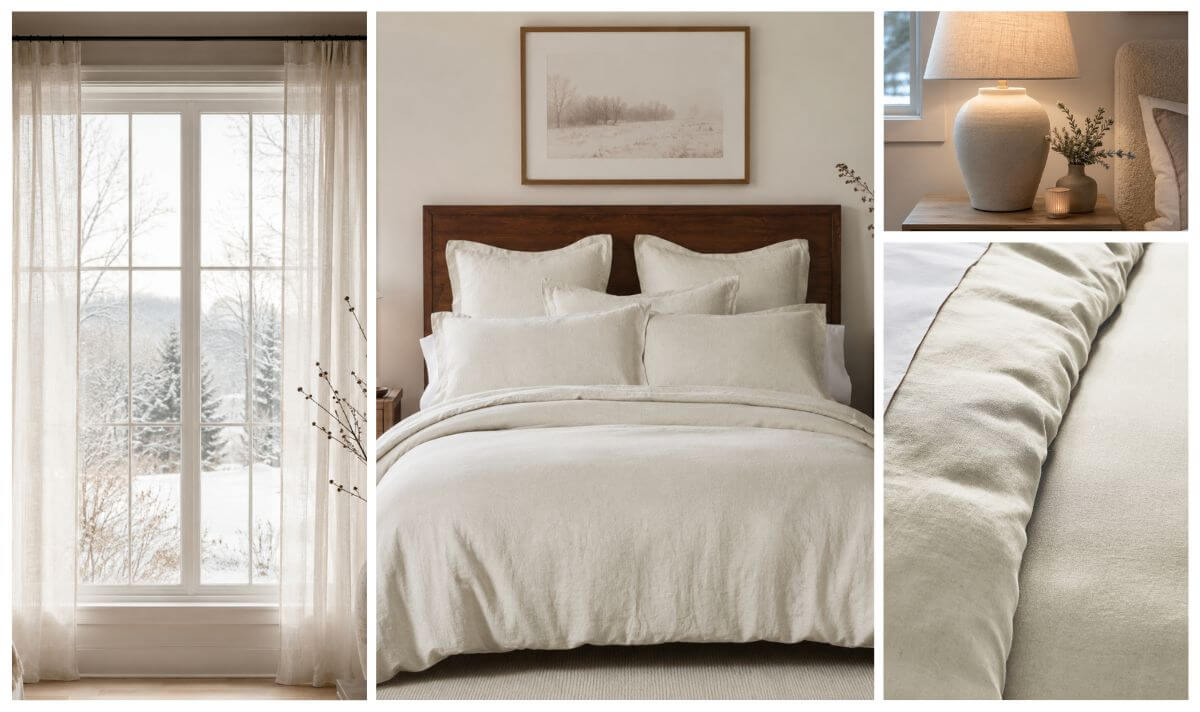
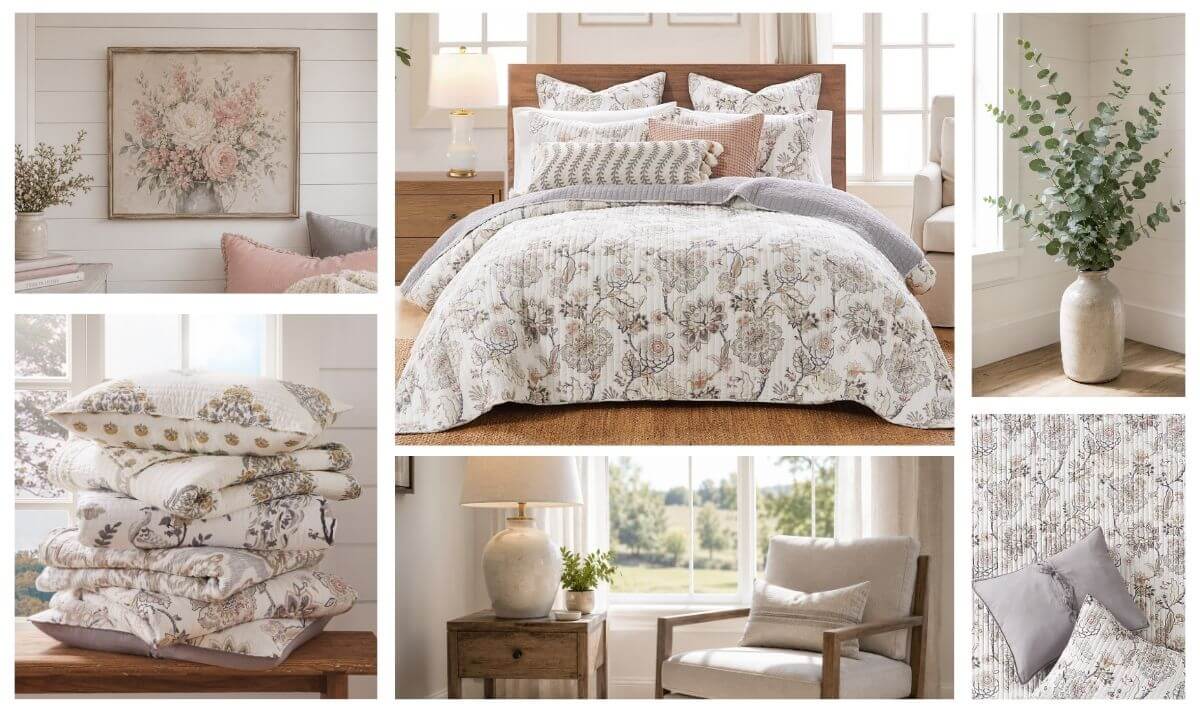


Coastal interior design works because it makes a home feel lighter, calmer, and more pulled together without asking you to decorate like you own a souvenir shop with a mortgage. The best version is not overly themed. It is airy, layered, textured, and easy to live with. That is a big reason the style keeps holding on: it feels timeless when it is done with restraint.
The good news is you do not need a waterfront address or a full-room overhaul to make coastal style work. In most homes, it comes down to a few smart decisions: a softer palette, natural materials, breathable layers, and just enough editing to keep the room from tipping into cliché. If you want the easiest place to start, begin in the bedroom with Levtex Home’s coastal bedding collection, which includes quilts, comforters, duvet covers and throws designed around stripes, ocean-inspired prints, and easy layered styling.
What Coastal Interior Design Actually Looks Like in a Home
Coastal interior design is less about “beach stuff” and more about atmosphere. It pulls from the colors and textures of the shoreline, sand, sea, sky, driftwood, woven fibers, washed fabrics, and turns them into rooms that feel relaxed, open, and rooted in natural beauty. Architectural Digest frames the look as refined and serene rather than kitschy, while Southern Living’s coastal guidance leans on the same core ideas: soft color, natural materials, and a connection to the outdoors.
Coastal Style Works Better When It’s Edited
This is where people usually go off the rails. They start with a good idea, then keep adding shells, signs, rope, lanterns, coral, anchors, until it just can become too much. A coastal room should suggest the shore, not hit you over the head with it.
The strongest coastal interiors use fewer, better choices. Let the palette do most of the work. Let the texture carry the rest. Save the obvious motifs for one or two accents at most. That is what keeps the room calm instead of costume-y. Architectural Digest explicitly distinguishes refined coastal interiors from lighter, breezier, more overtly “beachy” decor, and House Beautiful warns against pushing the theme too far.
Coastal interiors are 100% in style because they are 100% timeless.Sarah Solis, via Architectural Digest
Two of our favorite coastal classics?
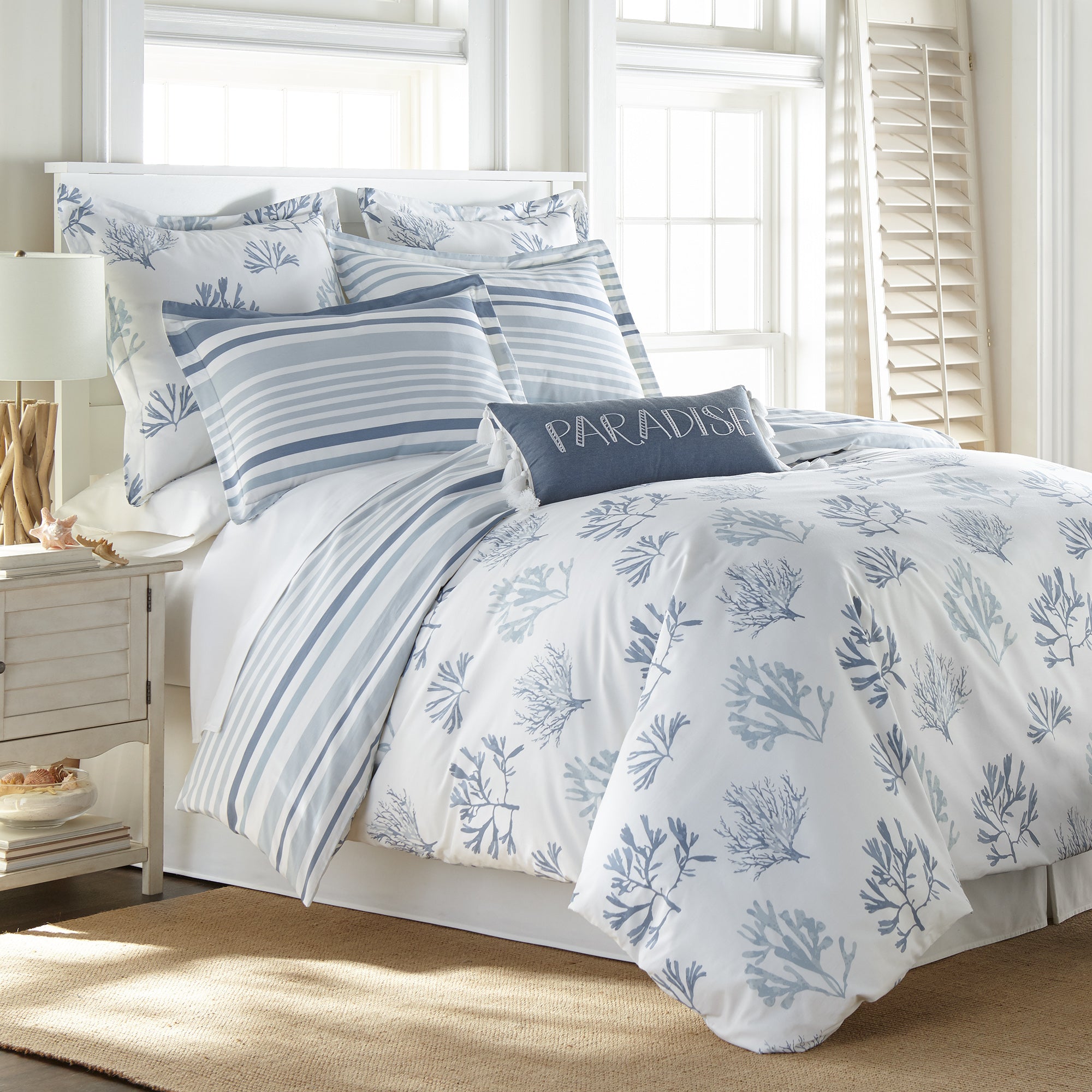
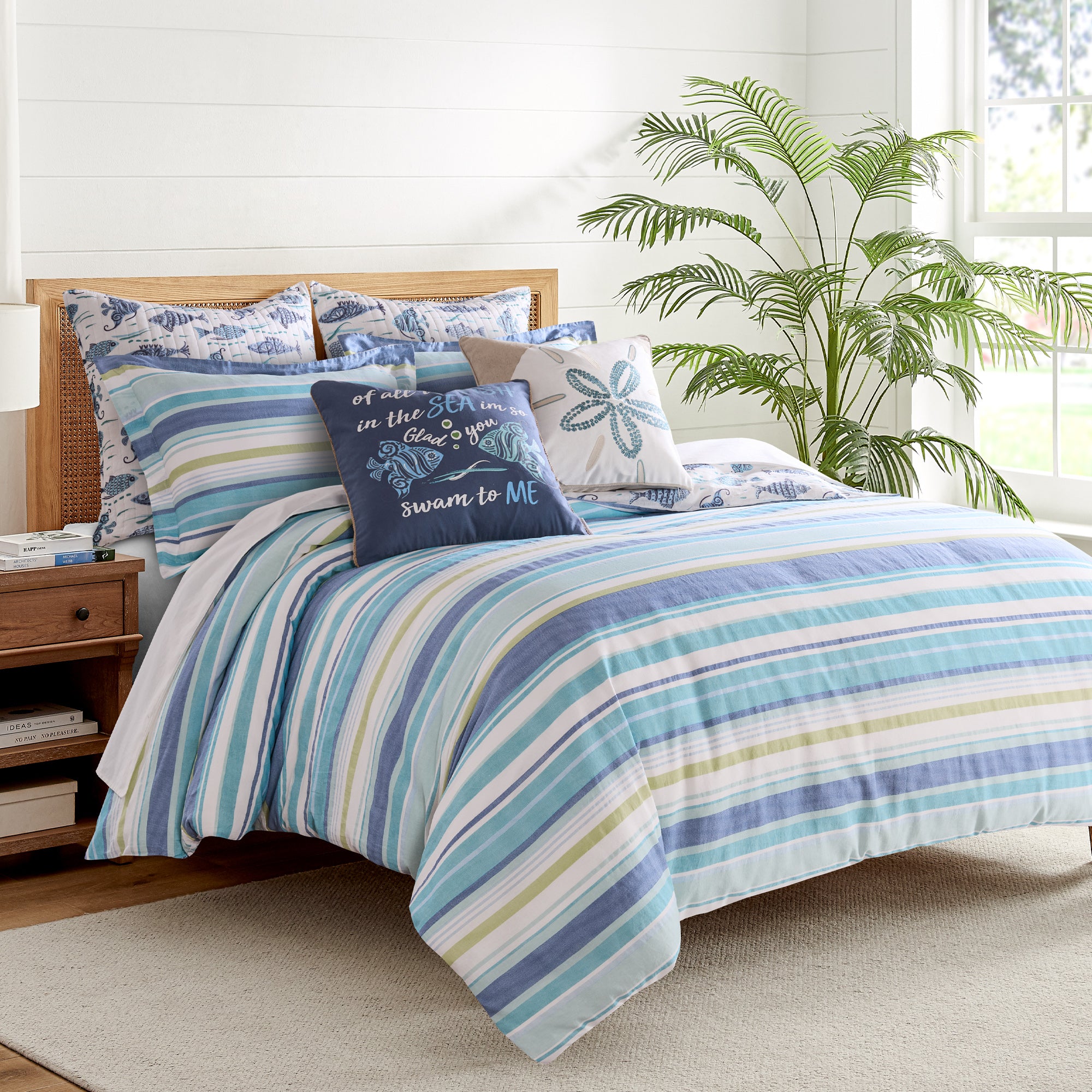
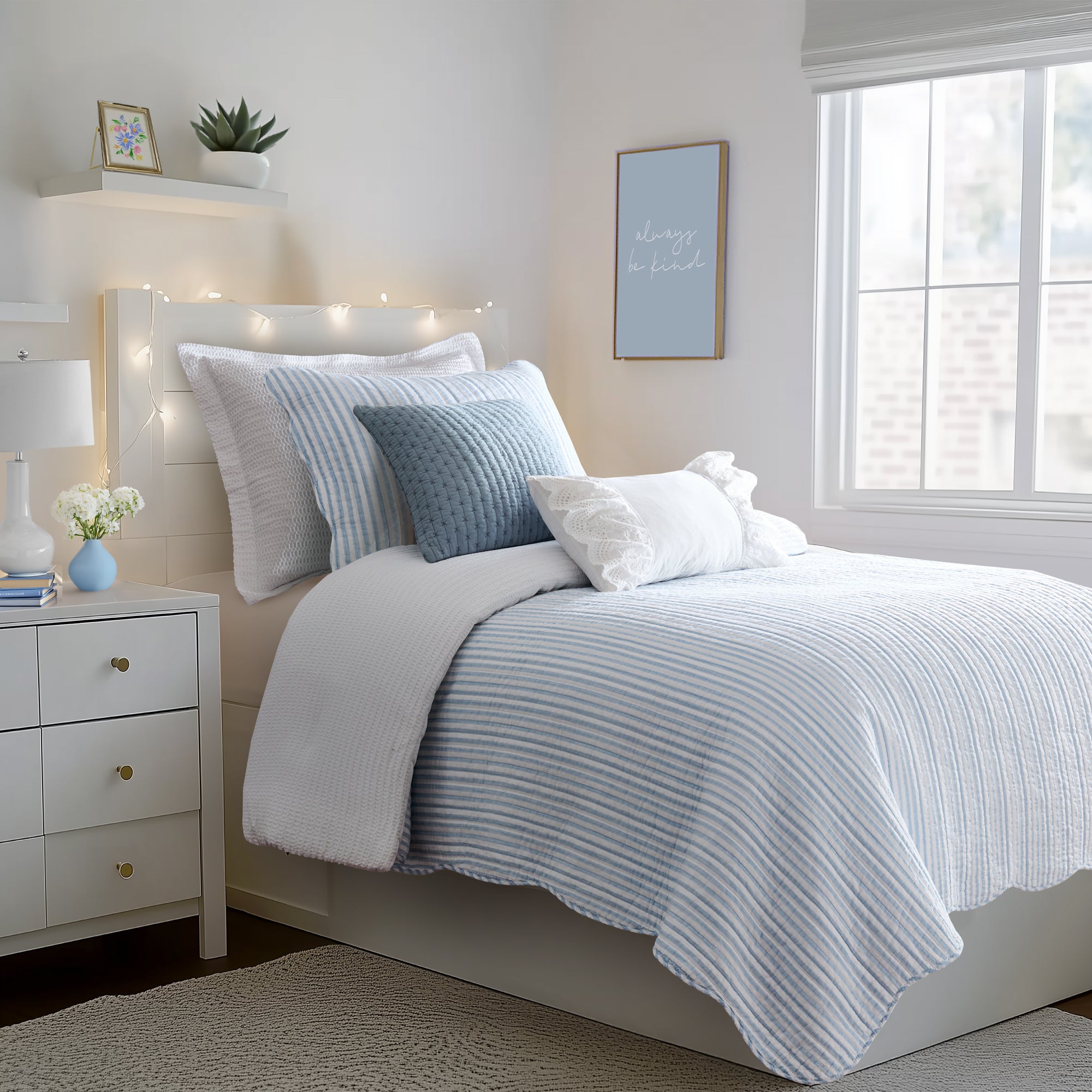
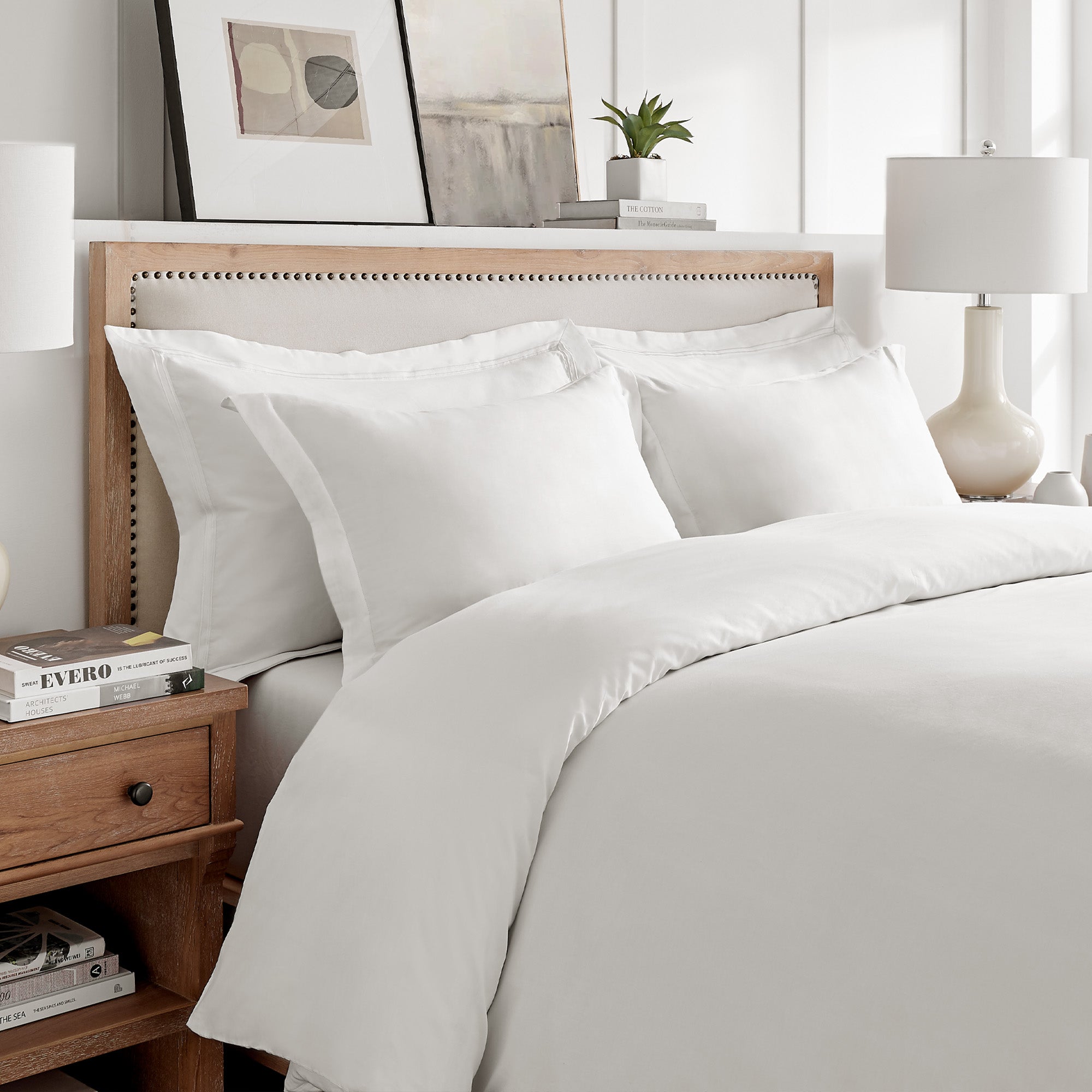
- Sand Stripes Comforter Set - sets that coastal tone all on its own.
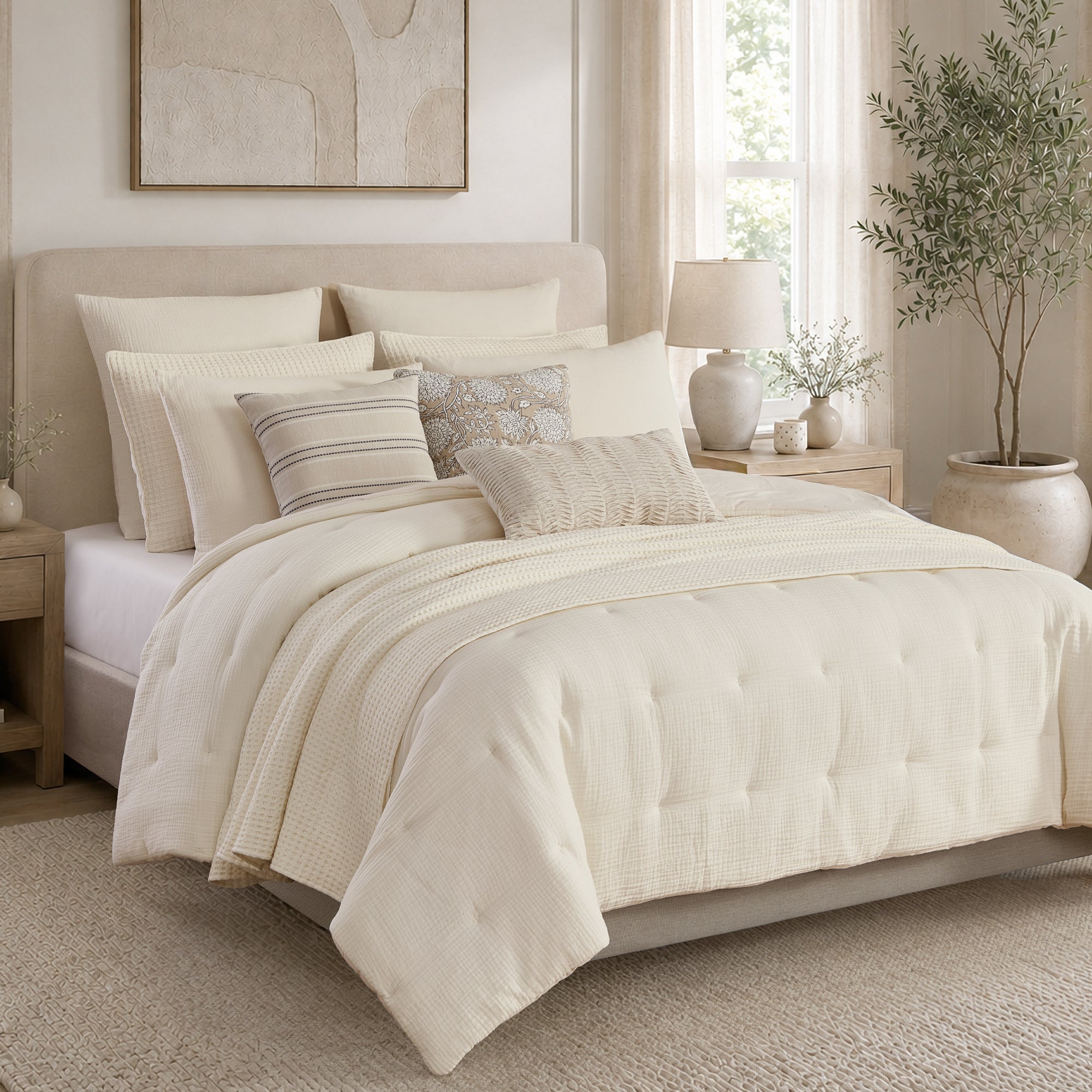
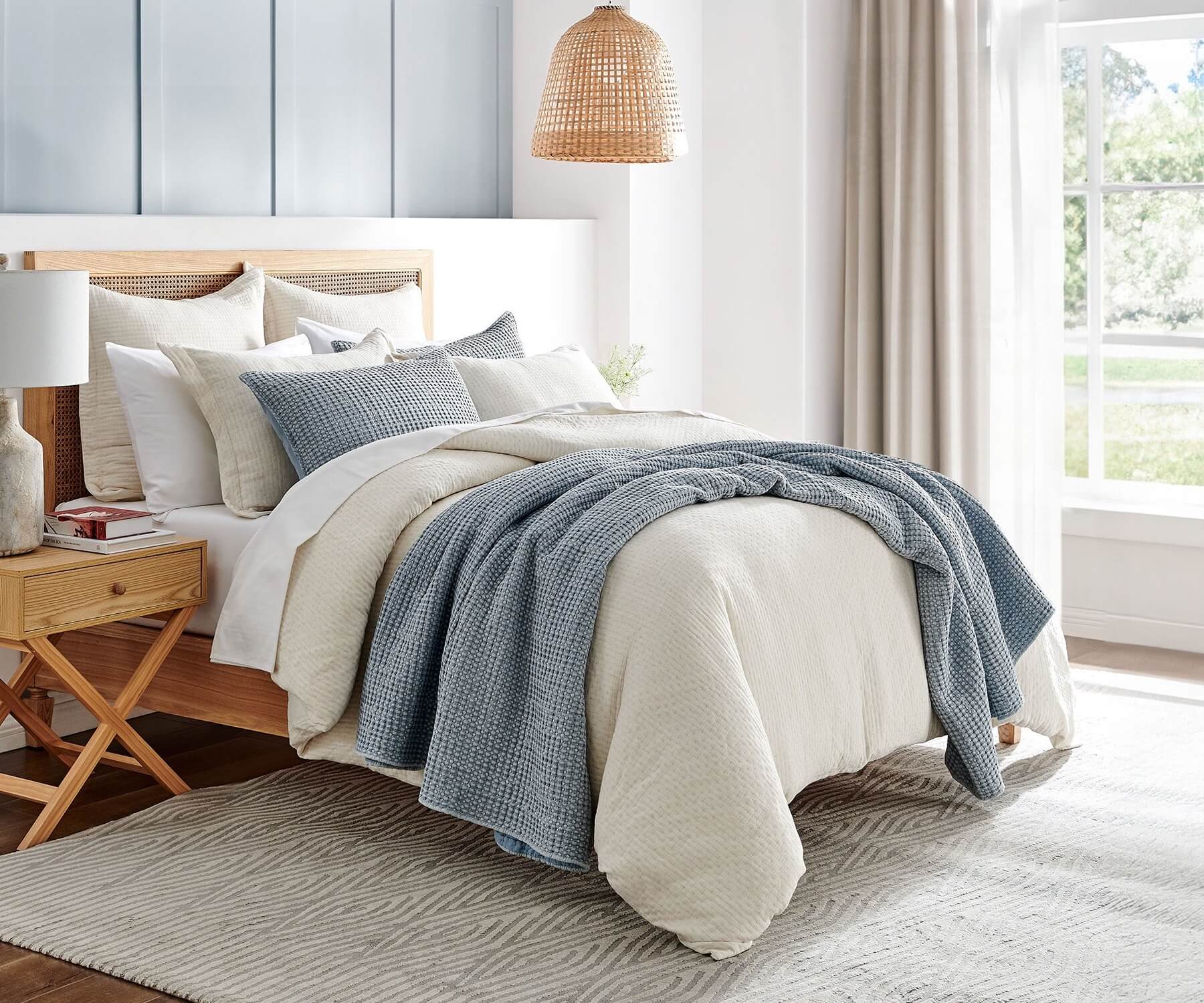
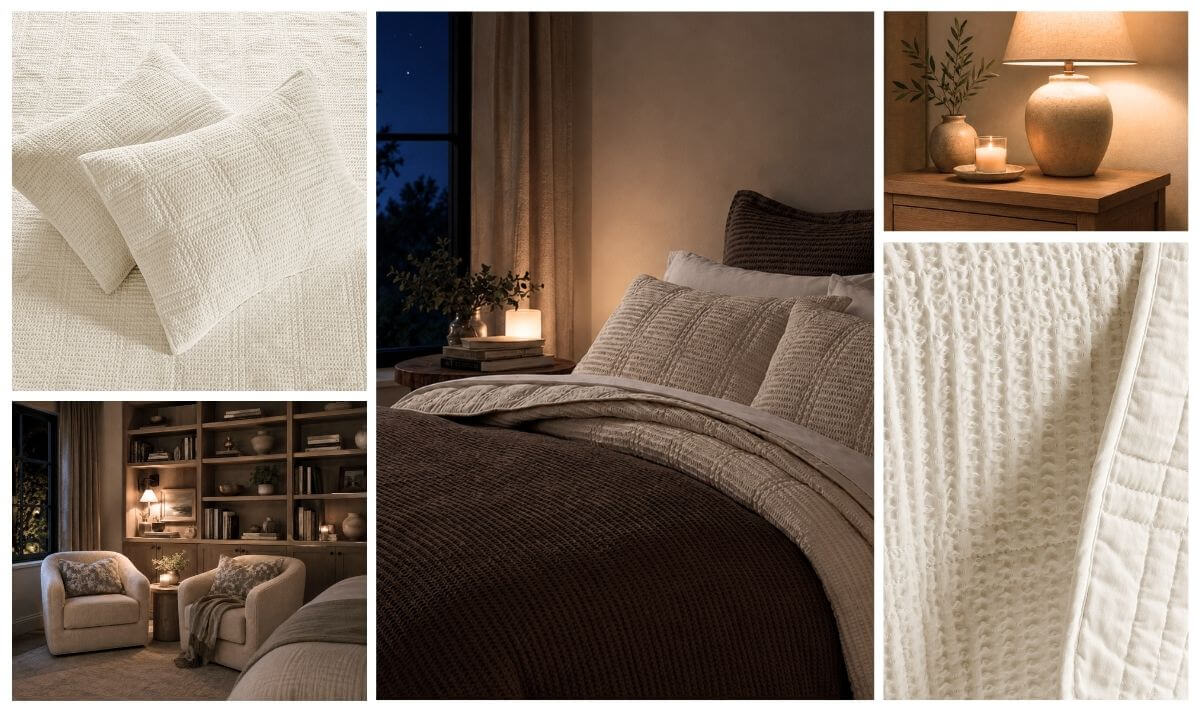
- Mills Waffle Quilt Set - the ideal extra layer and available in 15 colors.

How to Build a Coastal Color Palette That Feels Calm, Not Obvious
Color is usually the easiest way to shift a room toward coastal style. The classic palette still works for a reason: white, cream, sand, driftwood, pale blue, faded navy, soft green, and muted aqua all read fresh without feeling forced. Architectural Digest points to earthy tones like navy, white, cream, and soft greens, while Southern Living recommends colors inspired by coastal scenery, including bolder shades drawn from sea and sky when the room needs a little more life.
Use Color Like a Backdrop, Not a Performance
A coastal room usually looks best when the palette feels sun-faded rather than loud. That does not mean boring. It means the colors support the room instead of stealing the show.
A few combinations that usually work:
- ivory, sand, and weathered blue
- white, pale gray, and seafoam
- warm beige, navy, and natural wood
- cream, muted green, and woven texture
The goal is a room that feels settled and breathable. That is why soft neutrals and washed tones tend to outperform brighter, novelty-driven combinations in everyday spaces. Southern Living also notes that natural-fiber texture helps keep coastal palettes from feeling flat.
If you want a room to feel coastal fast, change the palette first and the accessories second. Doing it the other way around is how you end up with a lot of themed items and not a cohesive, pulled together point of view.
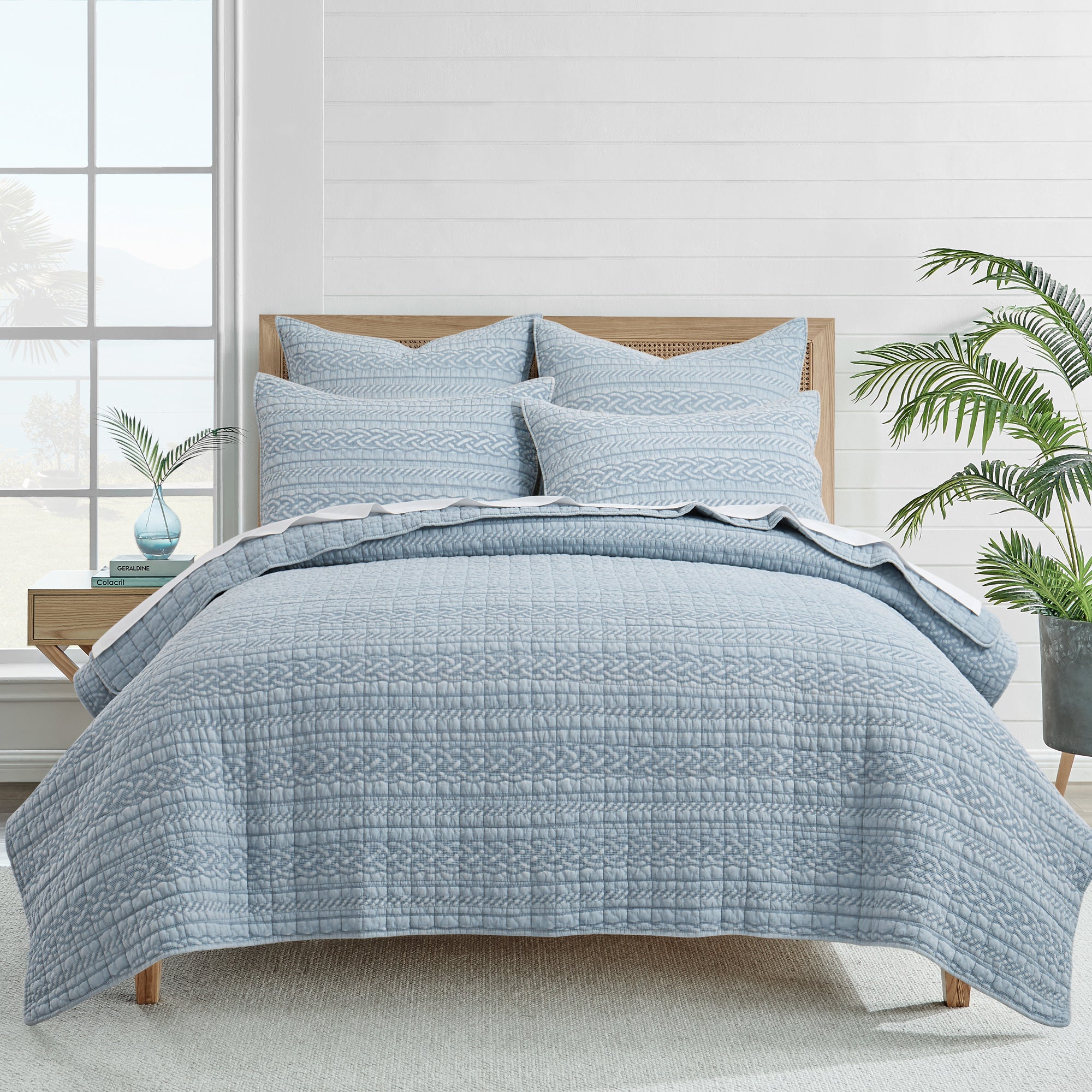
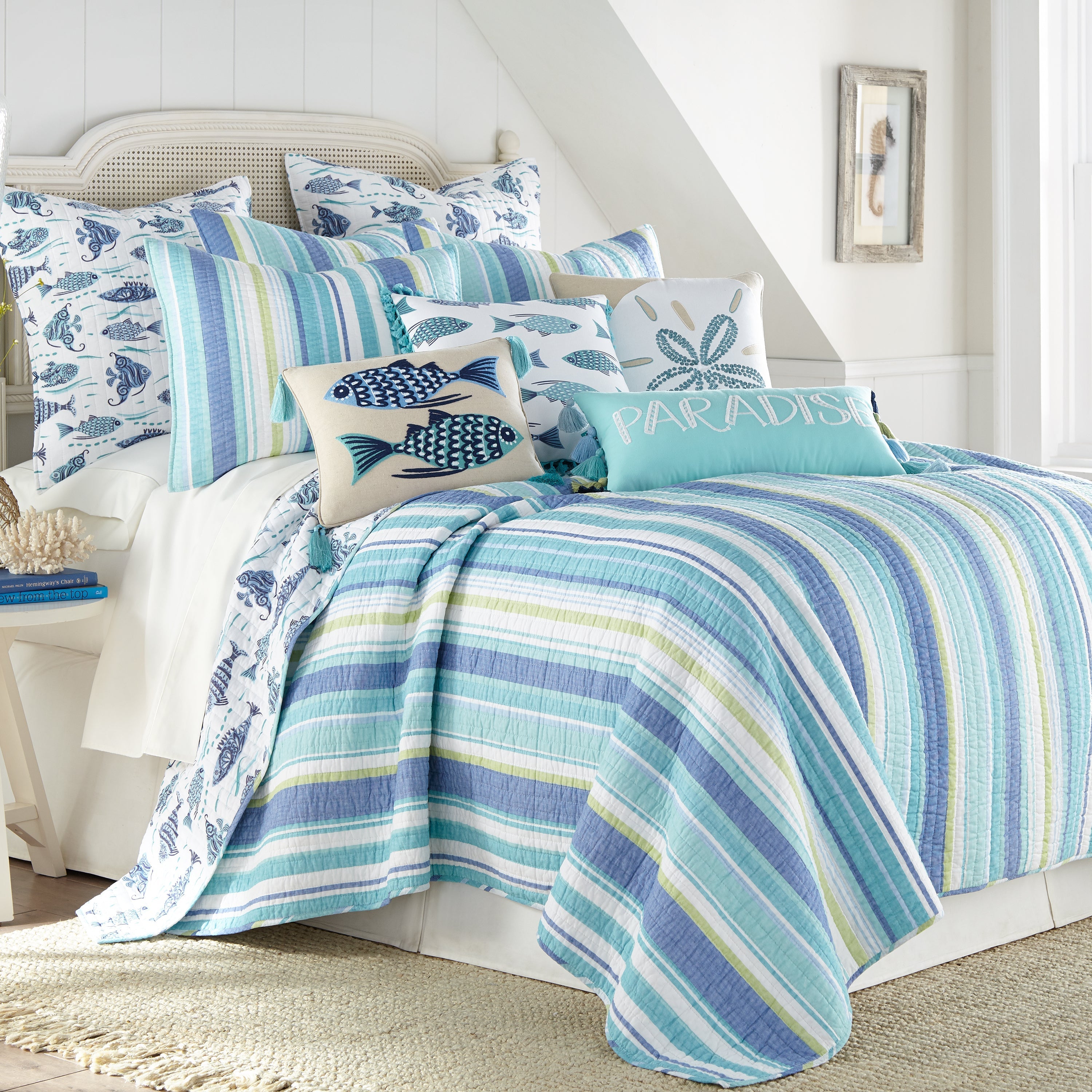
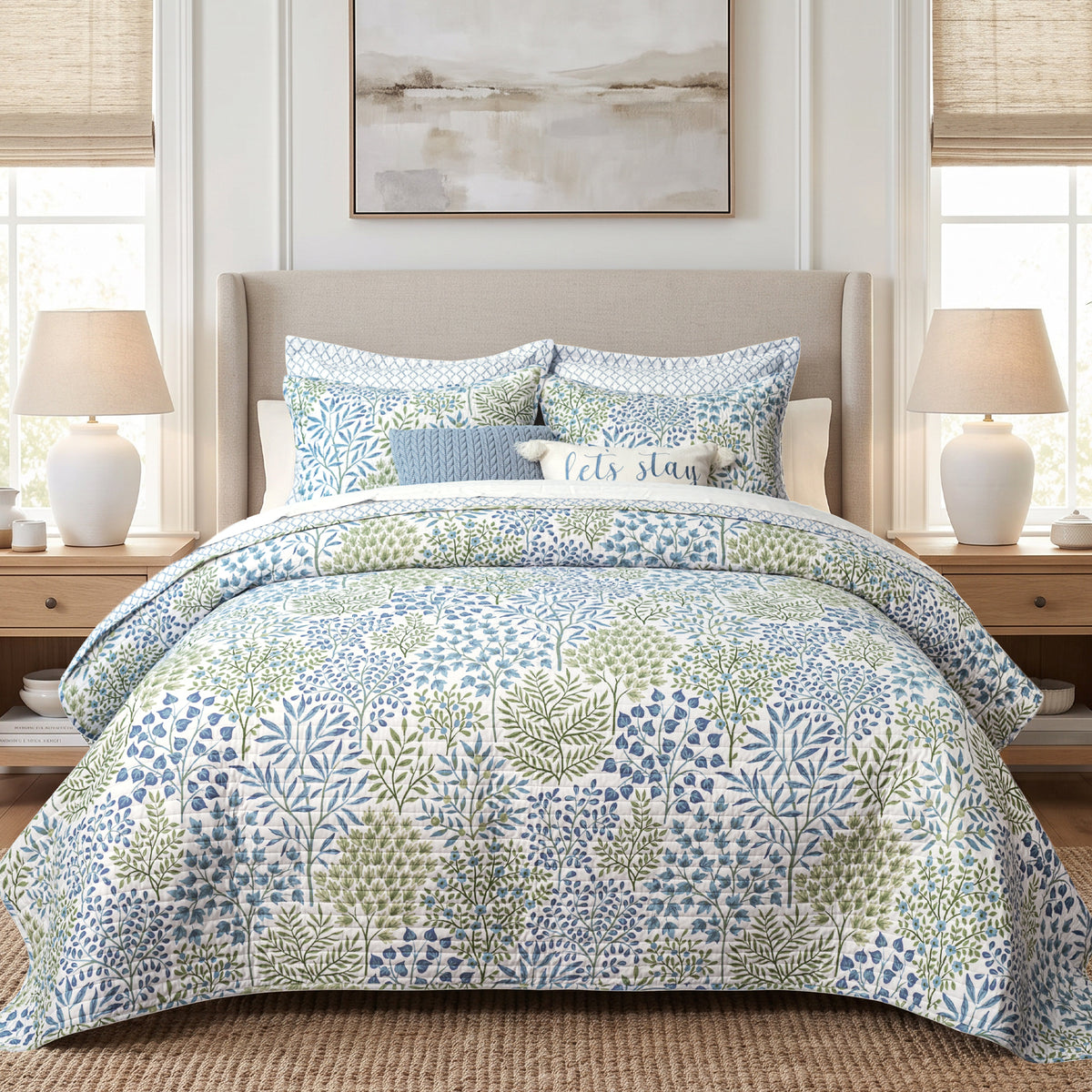
Looking for those perfect coastal blues? Start with our Trintton Quilt Set as the base and accent with our best-selling Mills Waffle Quilt Set in Navy.

Natural Textures Are What Make Coastal Design Feel Real
If color sets the tone, texture gives coastal style its backbone. Without texture, the whole thing falls flat. Too much pale blue and white with nothing grounding it, and suddenly the room feels flimsy instead of finished.
That is why natural materials matter so much here. Architectural Digest highlights wood, linen, jute, and rattan as core coastal materials, and Southern Living recommends natural fibers like jute, seagrass, and sisal to connect indoor spaces to the natural environment. Those materials bring in warmth, shape, and a little imperfection, which is exactly what keeps coastal rooms from looking staged.
A Coastal Room Should Feel Layered, Not Decorated
There is a difference. Decorated is when every piece looks chosen to prove the theme. Layered is when the room feels natural, balanced, and comfortable enough that real people could sit down in it.
In practical terms, that means mixing materials instead of repeating one idea to death. A coastal bedroom might pair crisp cotton with a quilted layer and one woven accent. A living room might combine a light upholstered sofa, a wood table, a jute rug, and a stripe throw. The room feels more convincing when texture does some of the talking. Architectural Digest’s coastal design guidance is built around exactly that mix of earthy tones and natural textures.
Earth tones and natural textures must work together to create a design that is harmonious with its surroundings.Angela Hamwey, via Architectural Digest
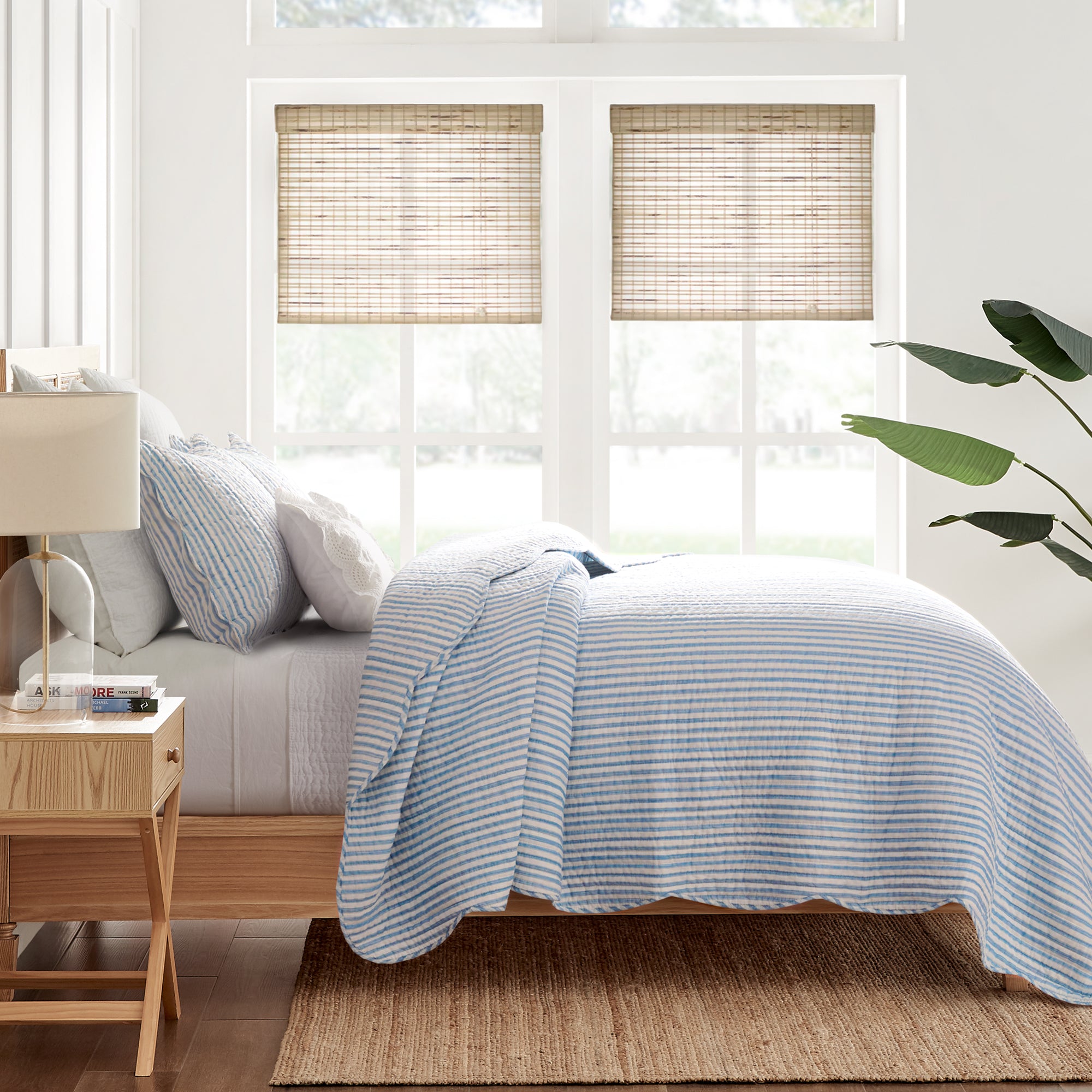
Want that perfect coastal stripe? One you can use all year-round? Our Martha Stripe Quilt Set comes in 6 shades, two of which are the ideal blue for that coastal vibe you’re looking for.

The Easiest Way to Bring Coastal Interior Design Home Is Through the Bedroom
The bedroom is the smartest place to start because bedding changes the mood of a room quickly. If the bed looks airy, layered, and calm, the rest of the room usually follows.
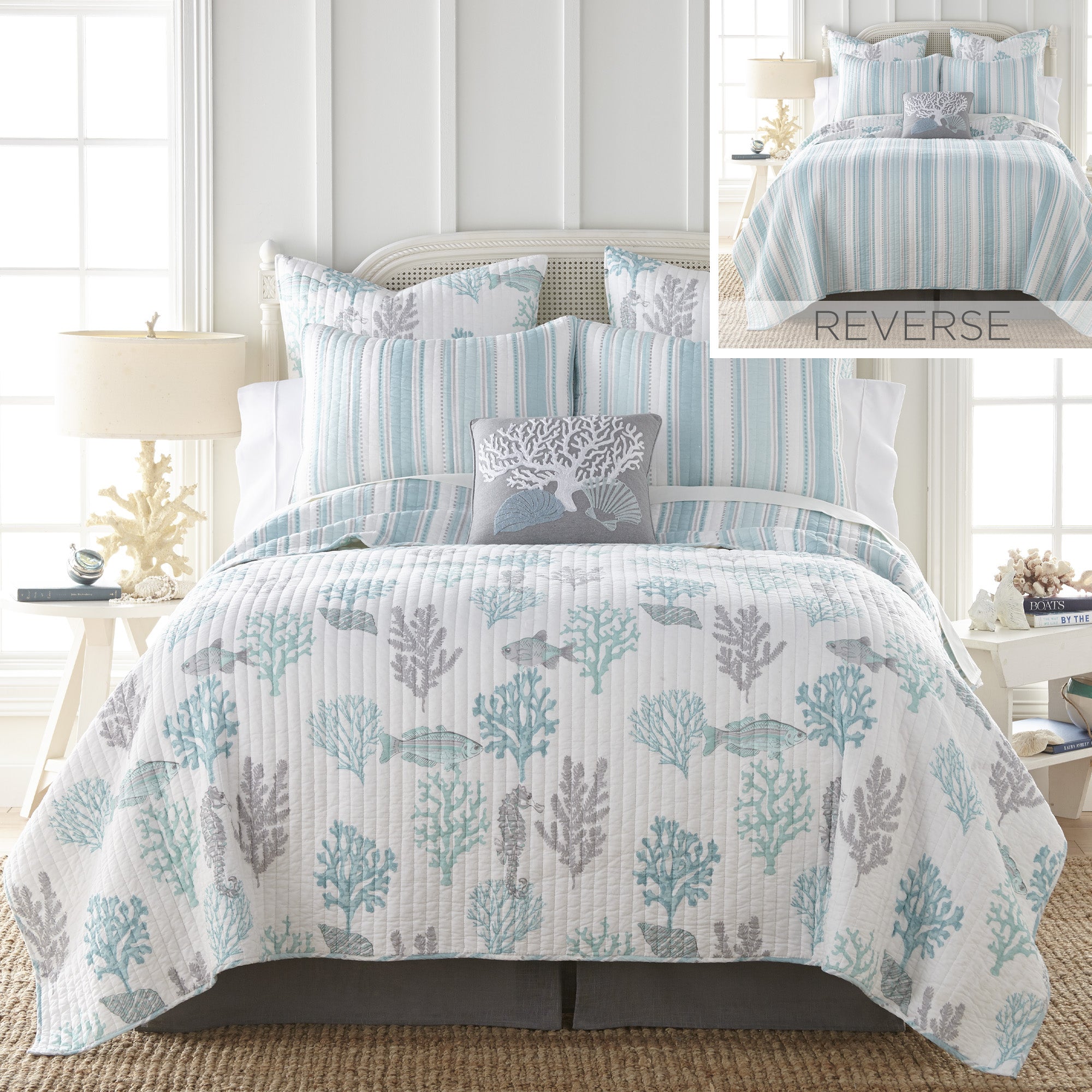
Levtex Home’s coastal bedding collection is useful here because it gives you different versions of coastal style instead of one narrow interpretation - giving you a broad range of choices to create the coastal version that best suits your personal style. The collection includes beach-inspired quilts, striped bedding, comforters, duvet covers and throws, with materials like cotton and lightweight constructions that work well for layering. Levtex also has dedicated coastal comforter, coastal duvet and coastal quilt assortments built around breathable, beach-friendly styling.
Pick the Version of Coastal That Fits Your Room
If you want a cleaner, more classic coastal look, stripes are the easiest entry point. They feel coastal without boxing you in, and they tend to work well beyond one season. Levtex’s striped bedding and striped comforters lean into that classic-coastal lane with cotton construction, reversible styling, and a more tailored look.
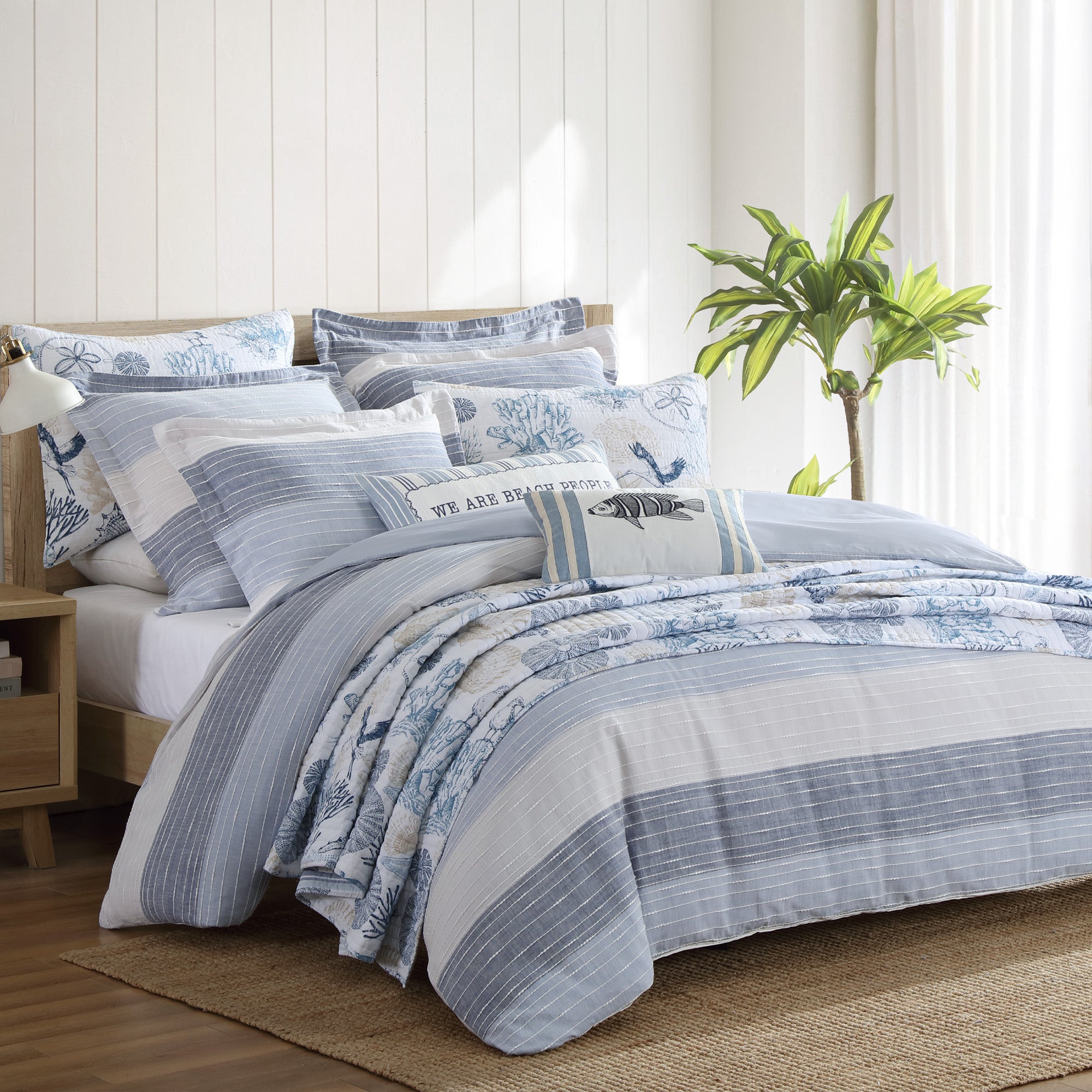
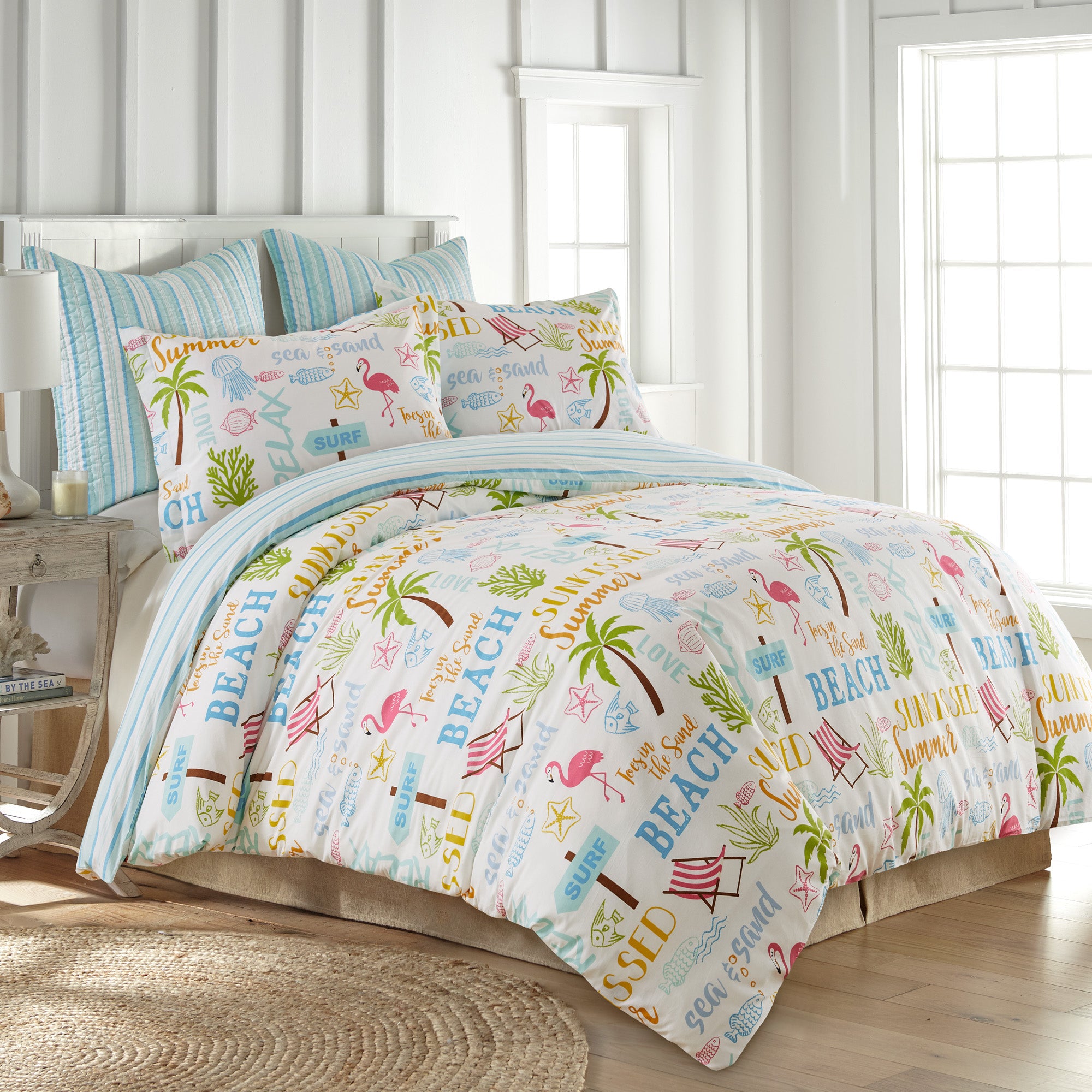
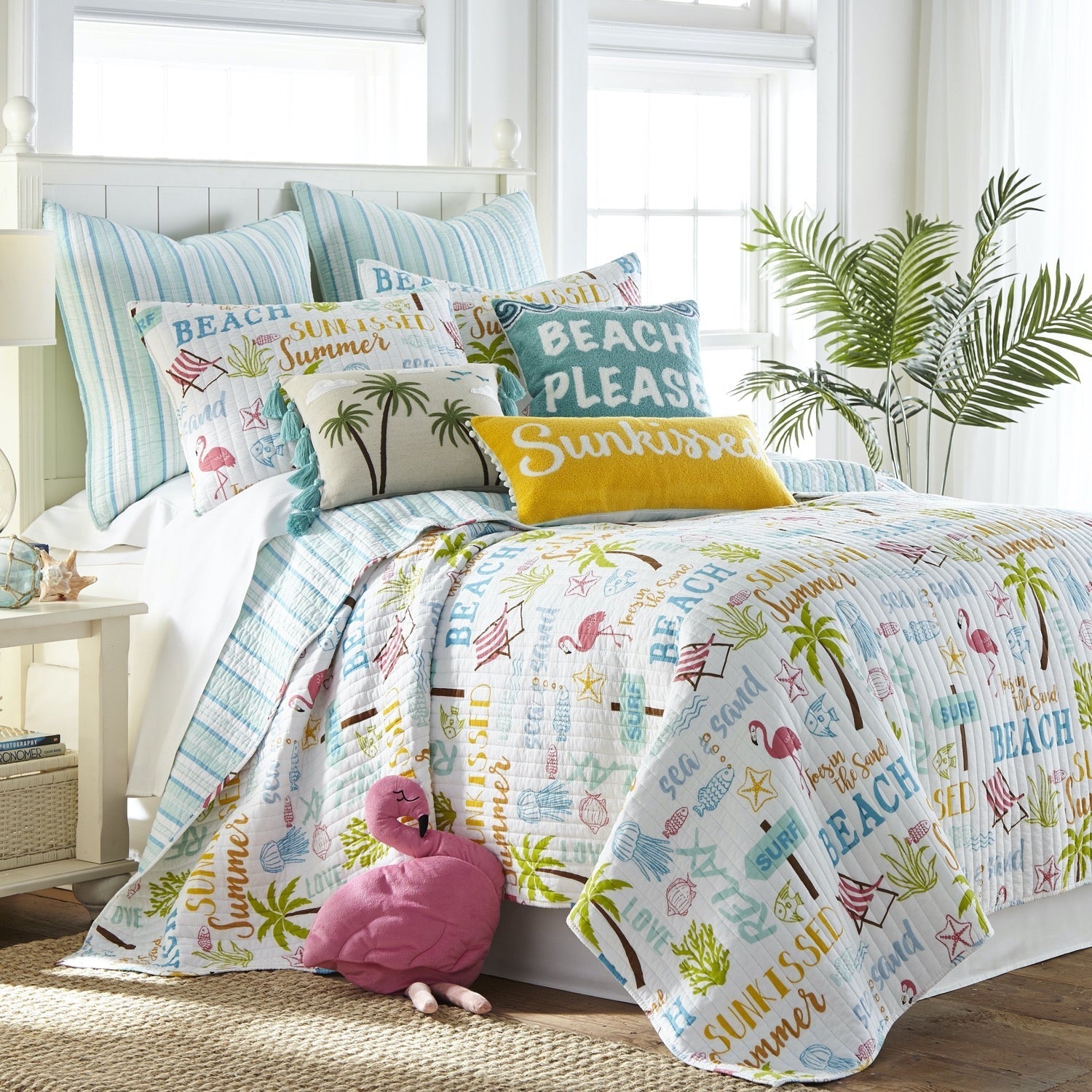
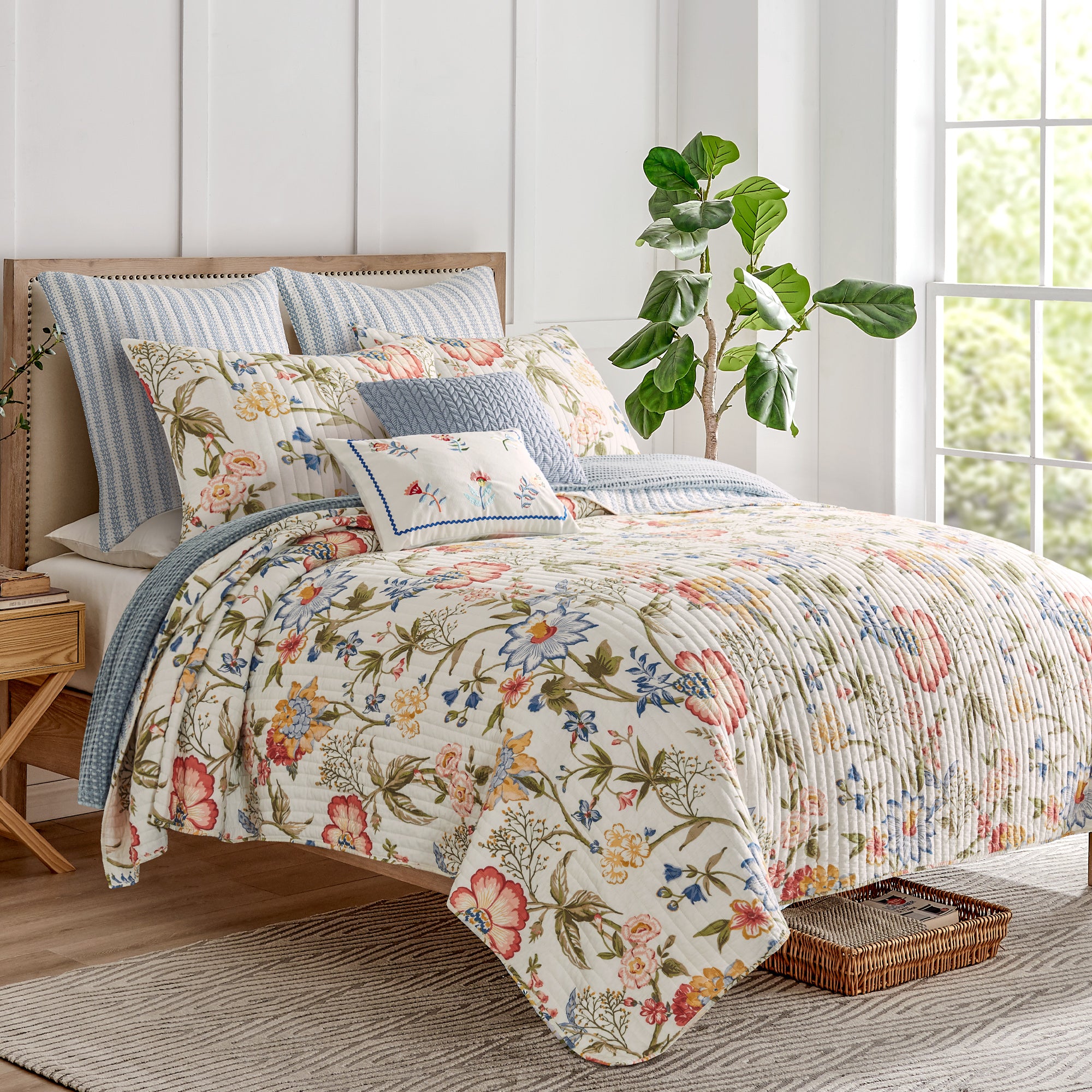
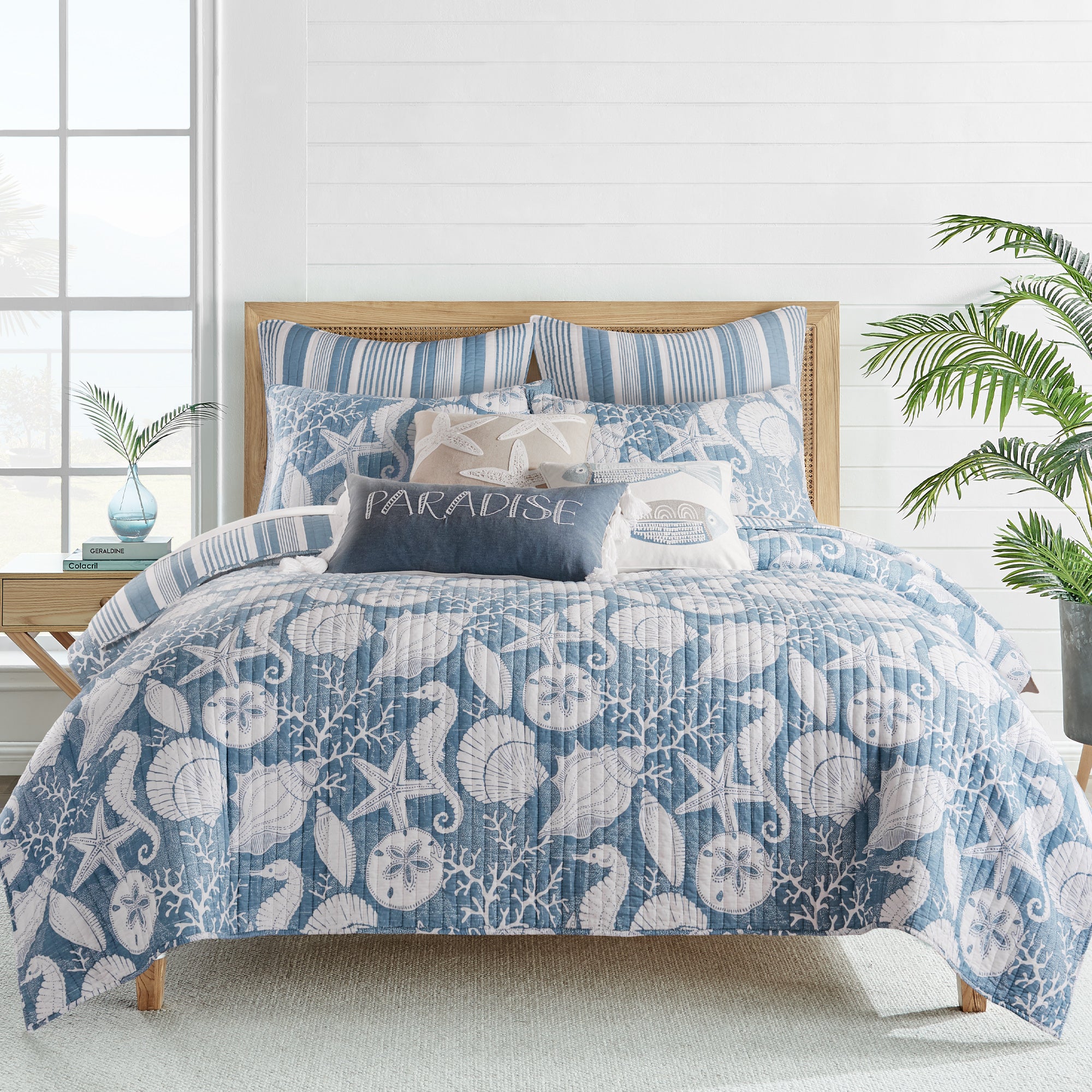
If you want more of a seaside story, motif-driven bedding can do that job. Levtex’s broader coastal assortment includes ocean-inspired prints, while products like the Beach Days comforter and quilt take a more playful route with beach motifs and reversible stripe backs. Those are better fits for guest rooms, kids’ rooms, or vacation-home spaces where you want a little more personality.
Layer the Bed Like a Grown-Up
A coastal bed should feel easy. Not sparse. Not overworked. Easy.
A simple formula:
- start with one main coastal layer, like a quilt or comforter
- use solid sheets in white, cream, pale blue, or sand
- add shams for structure
- bring in one textured accent pillow
- finish with a throw at the foot of the bed
That is enough. The point is to make the bed feel fresh and finished, not like it is auditioning for a catalog that forgot people sleep there. Levtex positions its coastal bedding as an easy way to create a beachy vibe through quilts, sheet sets, and accent throws, which makes this kind of layered approach especially practical.
In coastal bedrooms, texture should do at least half the work. If the whole look depends on shell prints, that is your cue to edit.
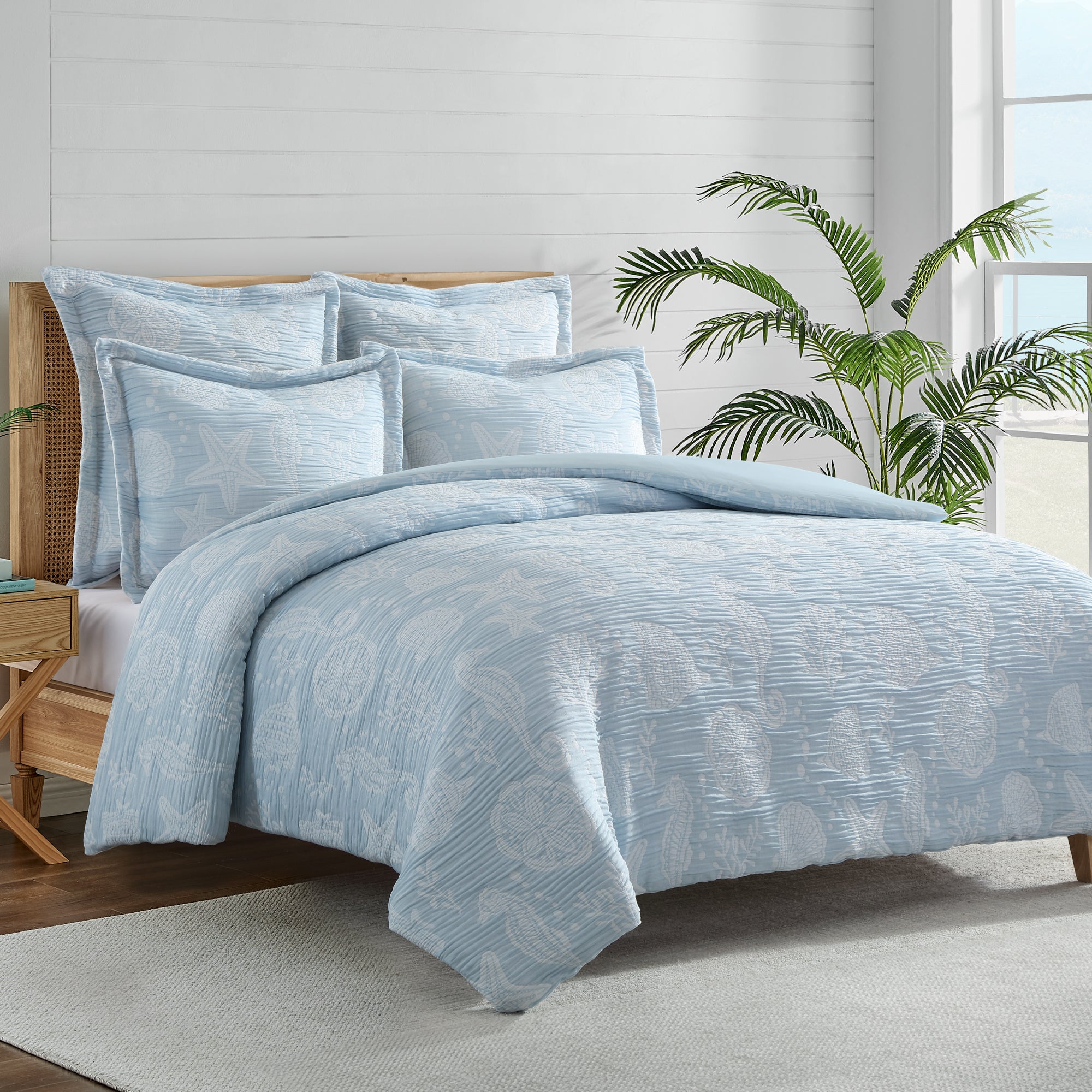
On the topic of shell prints, however, our Seaside Charm Comforter Set comes in 3 coastal-friendly colors, all ready to help you set that beachside bed of your dreams.

Coastal Style in Living Rooms Should Feel Lighter, Not Louder
Once the bedroom is working, the same logic carries into shared spaces. A coastal living room does not need to be redesigned from scratch. In fact, it usually should not be.
Southern Living’s coastal living room inspiration consistently leans on the same fundamentals: natural-environment color cues, comfortable furniture, openness, and a collected mix of texture and accents. Even HGTV’s broader guidance on coastal style centers on light, bright colors and natural woven materials.
Keep the Big Pieces Simple
If your sofa, chairs, or wood furniture already work, keep them. Coastal style is often more about what you add around the furniture than replacing every major piece. Light upholstery, softened wood tones, woven baskets, simple ceramics, and airy textiles can shift the room pretty quickly.
That is also where smaller Levtex pieces can help. A coastal throw, a stripe, or one beach-inspired accent can add motion and softness without taking over the room. The brand’s coastal collection is built to support that layered, mix-and-match approach across bedding and smaller accents.
Edit the Accessories Harder Than You Think You Need To
Most rooms need less stuff, not more. A coastal living room feels stronger when the accents are sparse and intentional: one woven basket, one striped throw, a ceramic vase, a piece of art that nods to sea or sky. Done.
This is where the style either stays chic or tips into nonsense. House Beautiful’s Susan Petrie put it better than I can, and frankly with the right amount of annoyance.
Overly done coastal themes in beach homes make me want to run for the hills.Susan Petrie, via House Beautiful
Bathrooms, Guest Rooms, and Smaller Spaces Are Where Coastal Style Gets Easy
Bathrooms are easy wins for coastal design because the palette already makes sense there. White towels, a woven hamper, simple glass or ceramic accessories, light blue or sandy tones, and one natural texture underfoot can go a long way. The same goes for guest rooms, where coastal style naturally supports a calm, welcoming atmosphere. Southern Living’s coastal bedrooms and room inspiration repeatedly use these lighter, relaxed combinations.
For children’s rooms or vacation spaces, you can push the style a little more. A comforter or quilt with a more playful seaside motif works there because the room can carry more personality. The trick is still the same: let the bedding tell most of the story, then stop while you are ahead. Levtex’s Beach Days and Laida coastal pieces both lean into that more playful beach side of the category.
Coastal Interior Design FAQ
How can I incorporate coastal design elements without fully redecorating my room?
Start with bedding, pillows, a throw, a woven basket, and a calmer palette. You do not need all new furniture. You need lighter layers, better texture, and fewer heavy visual distractions. These are the same foundations emphasized across major coastal design guidance.
What are some quick tips for selecting coastal-themed bedding that fits my current bedroom style?
If your room is already neutral, start with a stripe because it is the most flexible route. If your room feels plain and needs more personality, go with a soft coastal print or reversible quilt. Keep the supporting layers simpler than the top layer. Levtex’s coastal and striped assortments make both routes easy to shop.
How do I maintain a balance between thematic coastal decor and a minimalist aesthetic?
Use color and texture first. Use motifs second. That keeps the room feeling calm and modern instead of overly themed. This aligns with the refined-vs-beachy distinction in Architectural Digest and with House Beautiful’s warning against overdone coastal themes.
Can I blend coastal design with other interior styles?
Yes. Coastal works especially well with cottage, farmhouse, traditional, transitional, and even modern rooms because its real building blocks, soft color, natural material, breathable texture, are flexible. Broader style coverage from Architectural Digest, HGTV, and Southern Living supports that adaptable, mix-friendly approach.
Bring Coastal Design Home With Levtex Home
The best coastal interiors do not try too hard. They feel airy, layered, and settled. They borrow from the coast’s best qualities, light, texture, ease, softness, and leave the clichés on the dock.
If you want to bring that feeling home, start where it makes the biggest visual difference: the bed. Explore Levtex Home’s coastal bedding collection and build from there with a few thoughtful layers and accents. That is how you get a room that feels calm, collected, and coastal in the right way.
References
1. Coastal Interior Design: Everything You Need to Know About This Nautical and Serene Style,
Architectural Digest
2. 20 Best Coastal Design Tips From the Pros,
Southern Living
3. Beach Living Room Decorating Ideas,
Southern Living
4. Coastal Bedding,
Levtex Home
5. Coastal & Beach Comforters,
Levtex Home
6. Coastal & Beach Quilts,
Levtex Home
7. Striped Comforters,
Levtex Home
8. 14 "Everyday" Things That Are Making Your Home Look Tacky, According to Designers,
House Beautiful