




There is a reason wabi sabi interior design keeps showing up in conversations about home decor right now. People are tired of rooms that look too finished, too styled, too afraid of real life. Wabi Sabi offers something calmer, softer, more human. It is a design approach rooted in simplicity, natural beauty, and an appreciation for things that are imperfect, weathered, and quietly meaningful. Architectural Digest sums it up beautifully as an aesthetic grounded in “imperfection, impermanence, and simplicity.”
What makes Wabi Sabi so appealing is that it does not ask you to build a perfect room; it asks you to build an honest one. That means natural materials, relaxed texture, earthy color, handmade character, and a home that feels collected rather than over-decorated. It also makes this style a very natural fit for bedding, quilts, throws, and soft layers that bring comfort and subtle beauty into everyday spaces.
What Is Wabi Sabi Interior Design?
At its core, Wabi Sabi is a Japanese philosophy that values authenticity over polish and beauty that comes from age, variation, and restraint. In interiors, that usually translates into rooms that feel calm, textural, and lived in rather than sleek or overly matched. You will see natural woods, linen, cotton, stone, clay, handmade ceramics, muted palettes, and simple shapes that leave room to breathe.
Part of the reason the style resonates now is that it offers a different kind of luxury. Not flashy. Not precious. Just deeply considered. It values the feeling of home over the performance of perfection, which is exactly why it continues to influence modern interior design.
Imperfection, impermanence, and simplicity.Architectural Digest, “Wabi-Sabi and Other Imperfectly Perfect Interior Styles in Practice”
Architectural Digest says that Wabi Sabi interiors value imperfection and authenticity in the way materials, objects, and rooms are allowed to show age and touch. (1)
The Key Characteristics of Wabi Sabi Interior Design
The easiest way to understand Wabi Sabi is to stop thinking about it as a trend and start thinking about it as a mood. It is quiet, but not cold. Edited, but not empty. Beautiful, but never too polished.
One of the core ideas of Wabi Sabi is that imperfection is part of the beauty. That might mean weathered wood, handmade ceramics with slight variation or imperfection, a washed linen with its beautiful lived-in texture, or a softened finish. A Wabi Sabi room does not feel aggressively decorated; it feels lived in. House Beautiful puts it plainly: “Embrace the imperfections.”
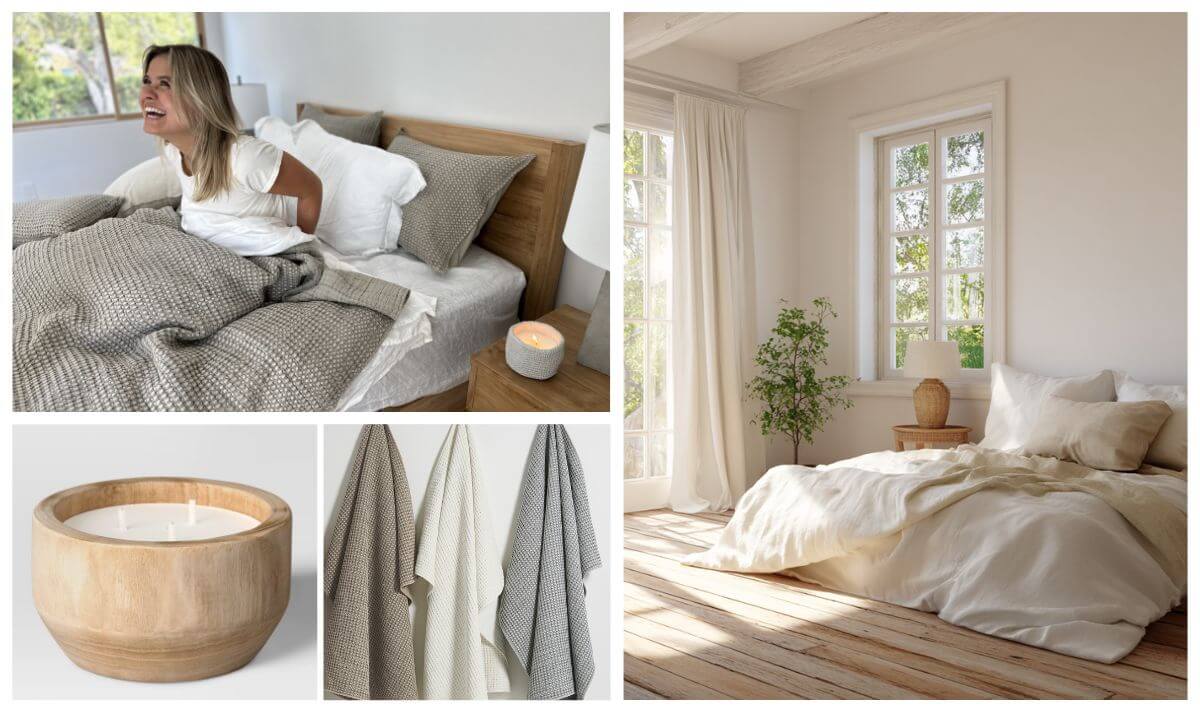
Another core characteristic is the use of natural materials. Wabi Sabi rooms tend to lean on wood, linen, cotton, clay, stone, plaster, and fibers with visible texture. These materials bring warmth and tactile depth, which is part of what makes the style feel grounded instead of sterile.
Color matters too. Wabi Sabi interiors usually favor muted, earthy tones: soft whites, sand, taupe, clay, mushroom, weathered brown, muted greens, and washed grays. The palette should feel natural and easy, not stark or overly contrast-heavy.

And finally, there is simplicity. Not emptiness for the sake of aesthetics. Simplicity with intention. Rooms should feel like they contain what matters and leave out what does not. That is part of the calm.
House Beautiful recommends looking at chips, wear, and irregularities not as flaws to hide, but as details that add character and life to a space. (2)
How to Create a Wabi Sabi Home
The good news is that creating a Wabi Sabi home does not require a dramatic makeover. In most cases, it works better when it feels gradual.
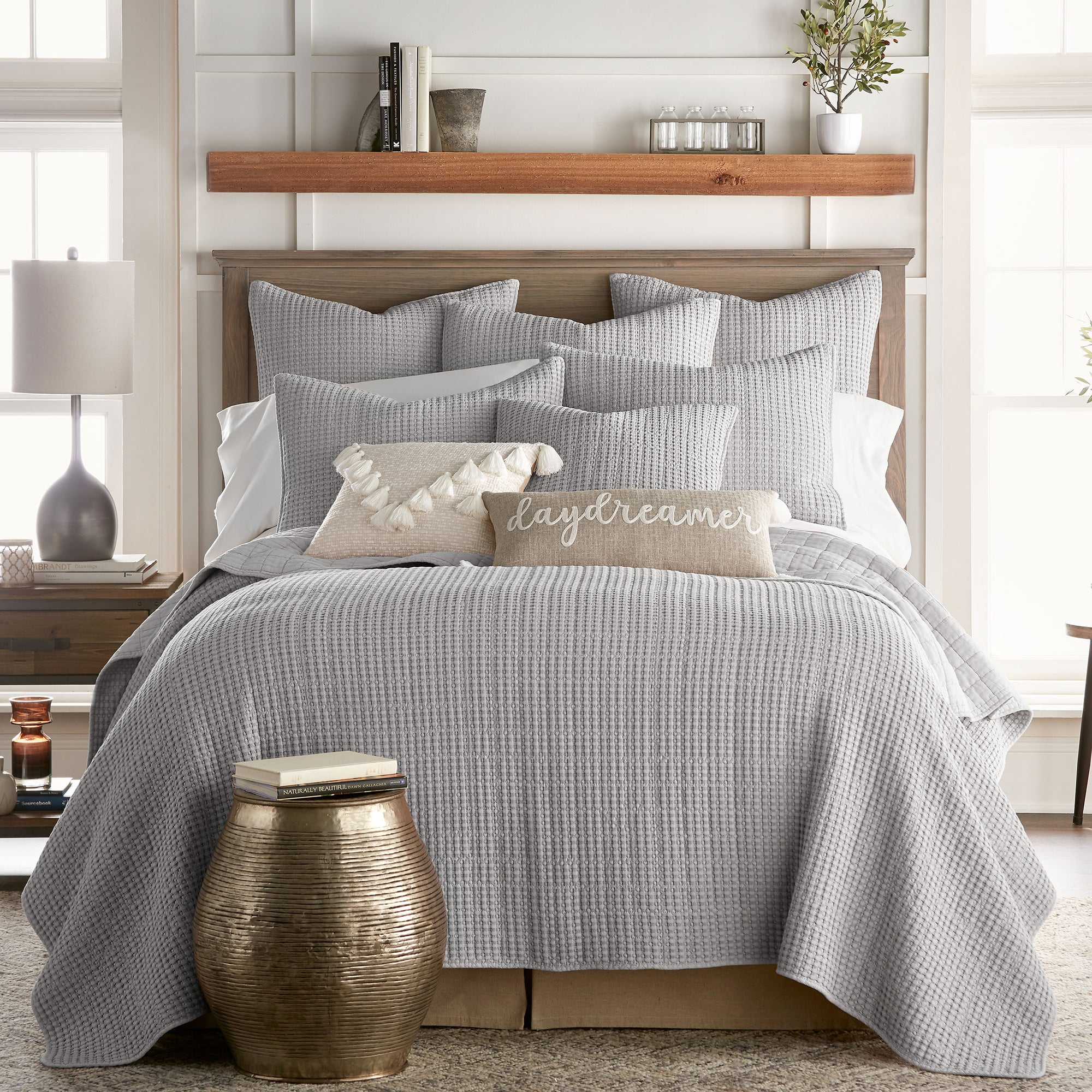
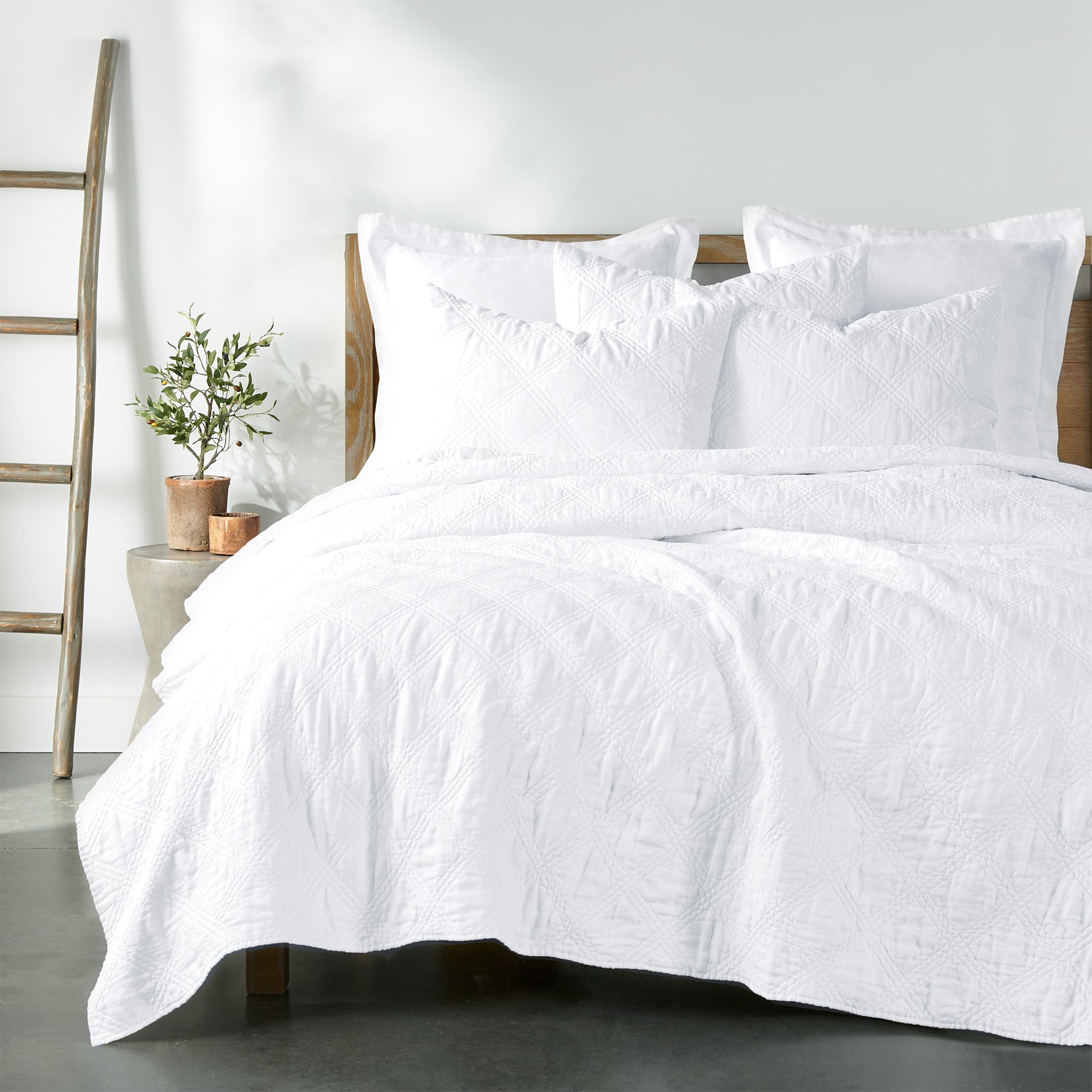
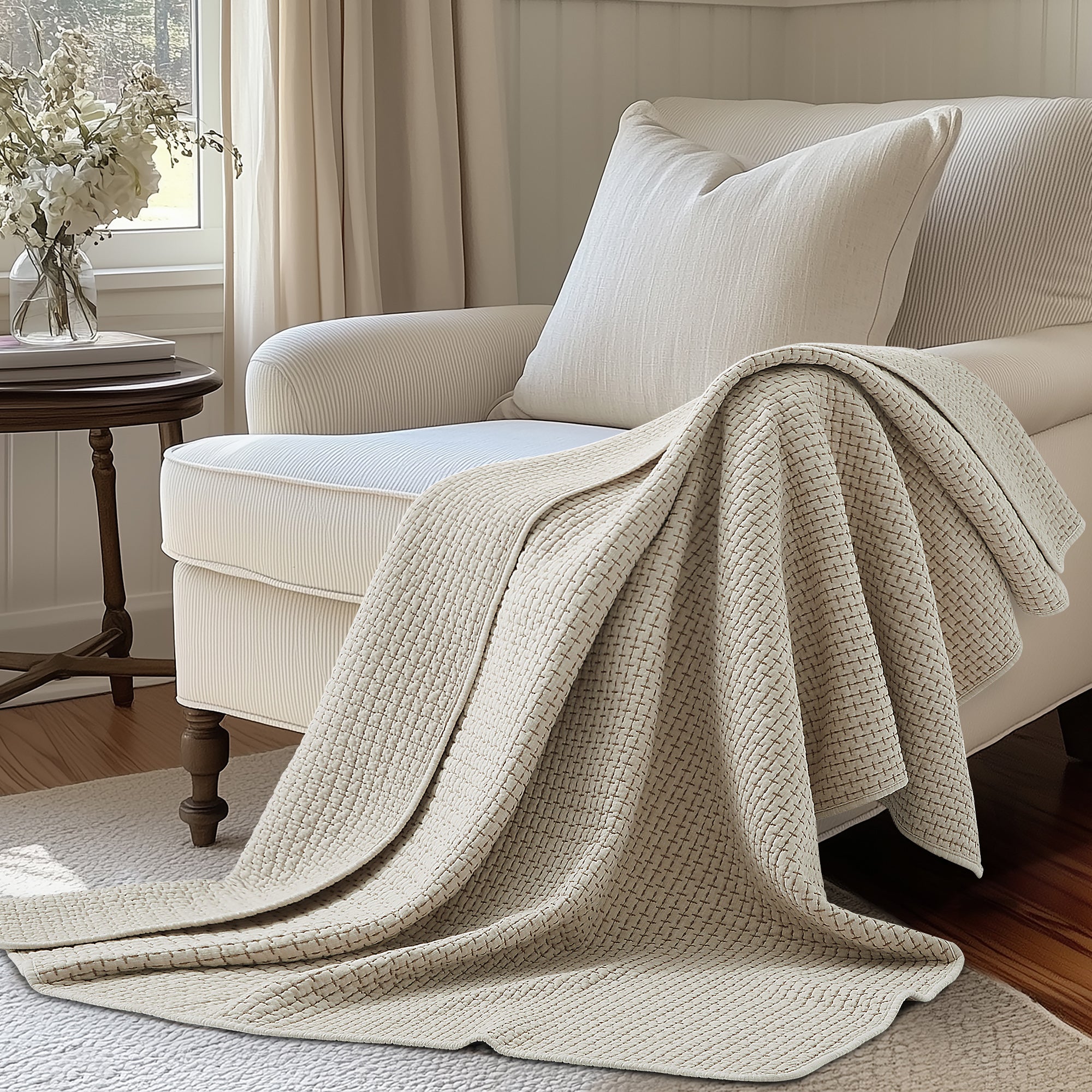
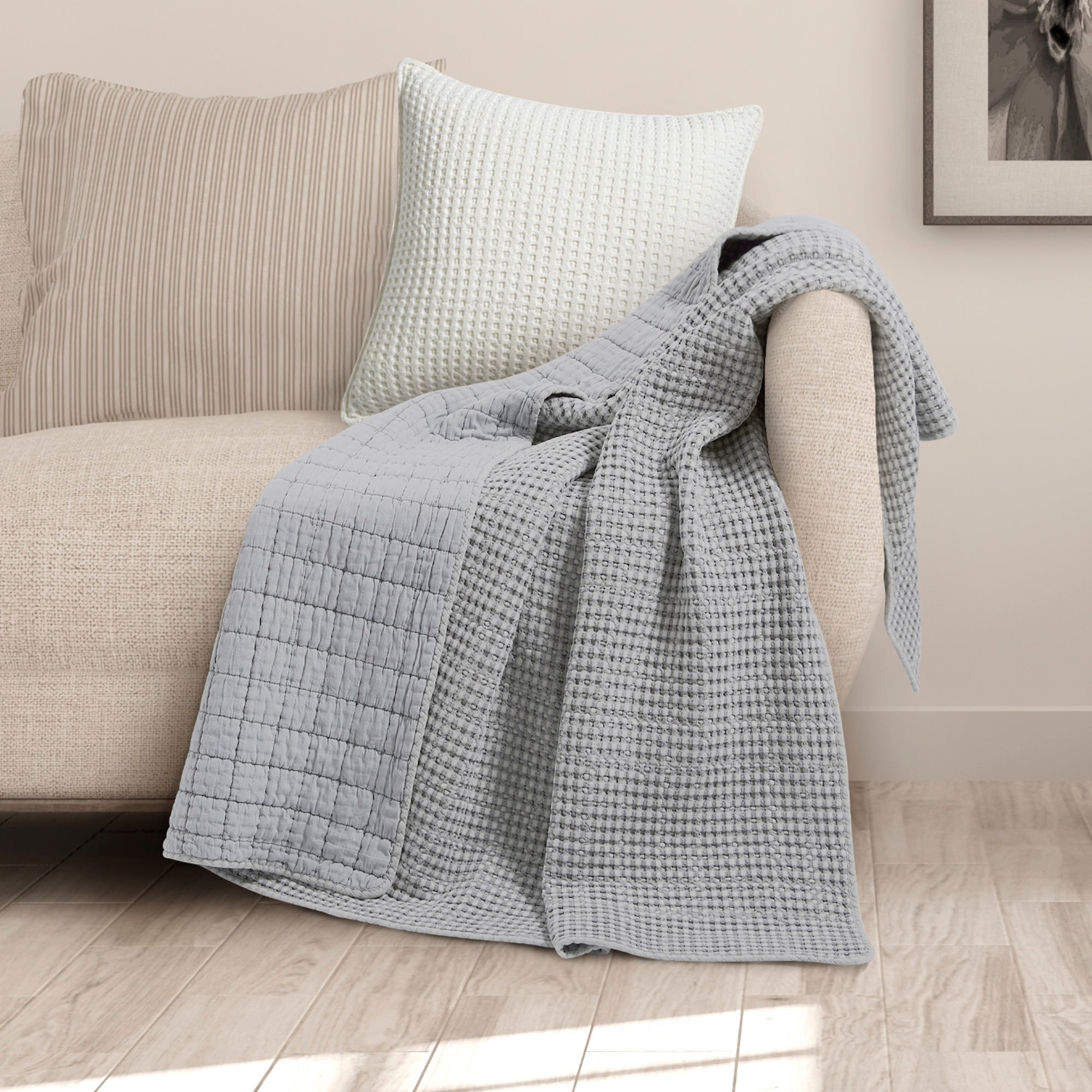
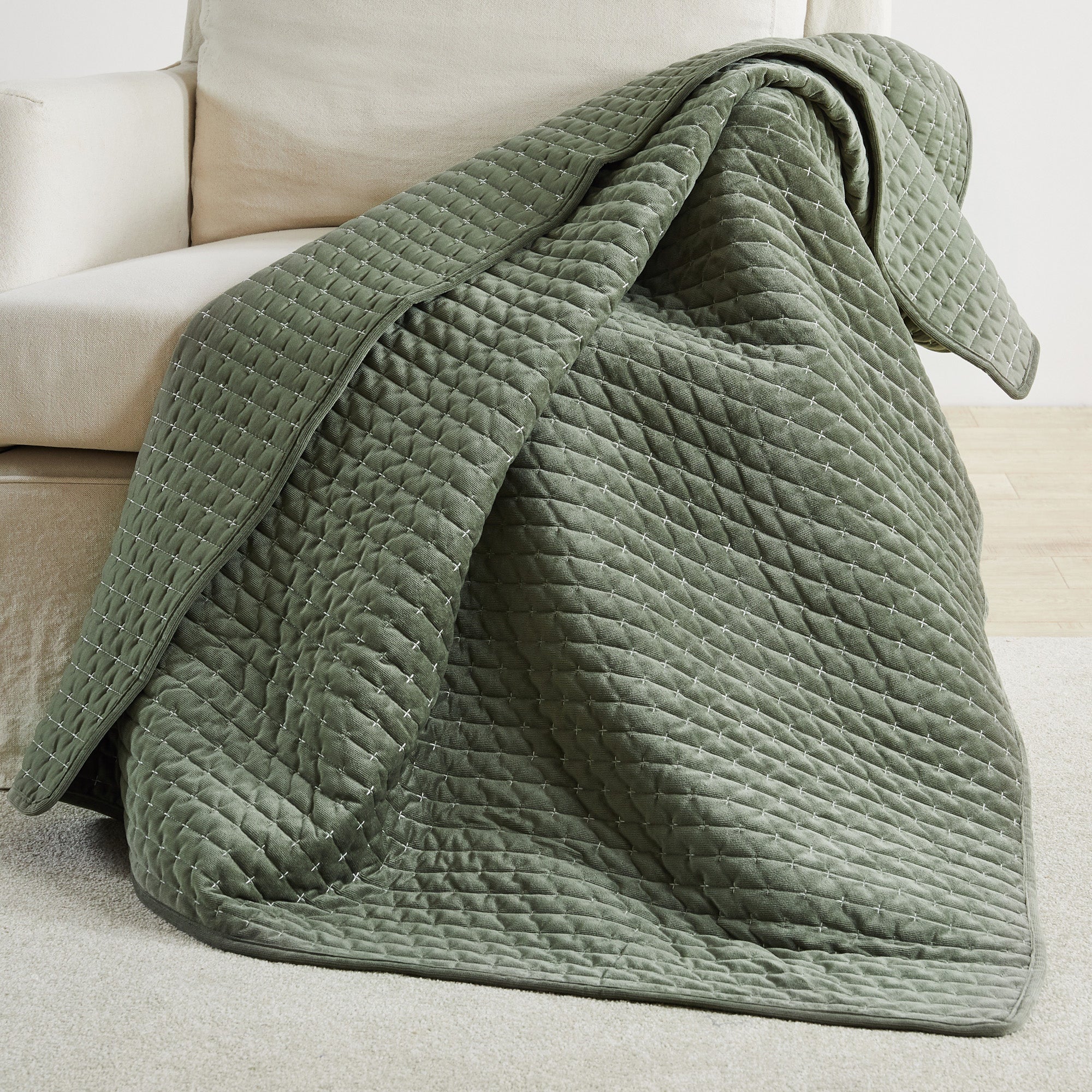
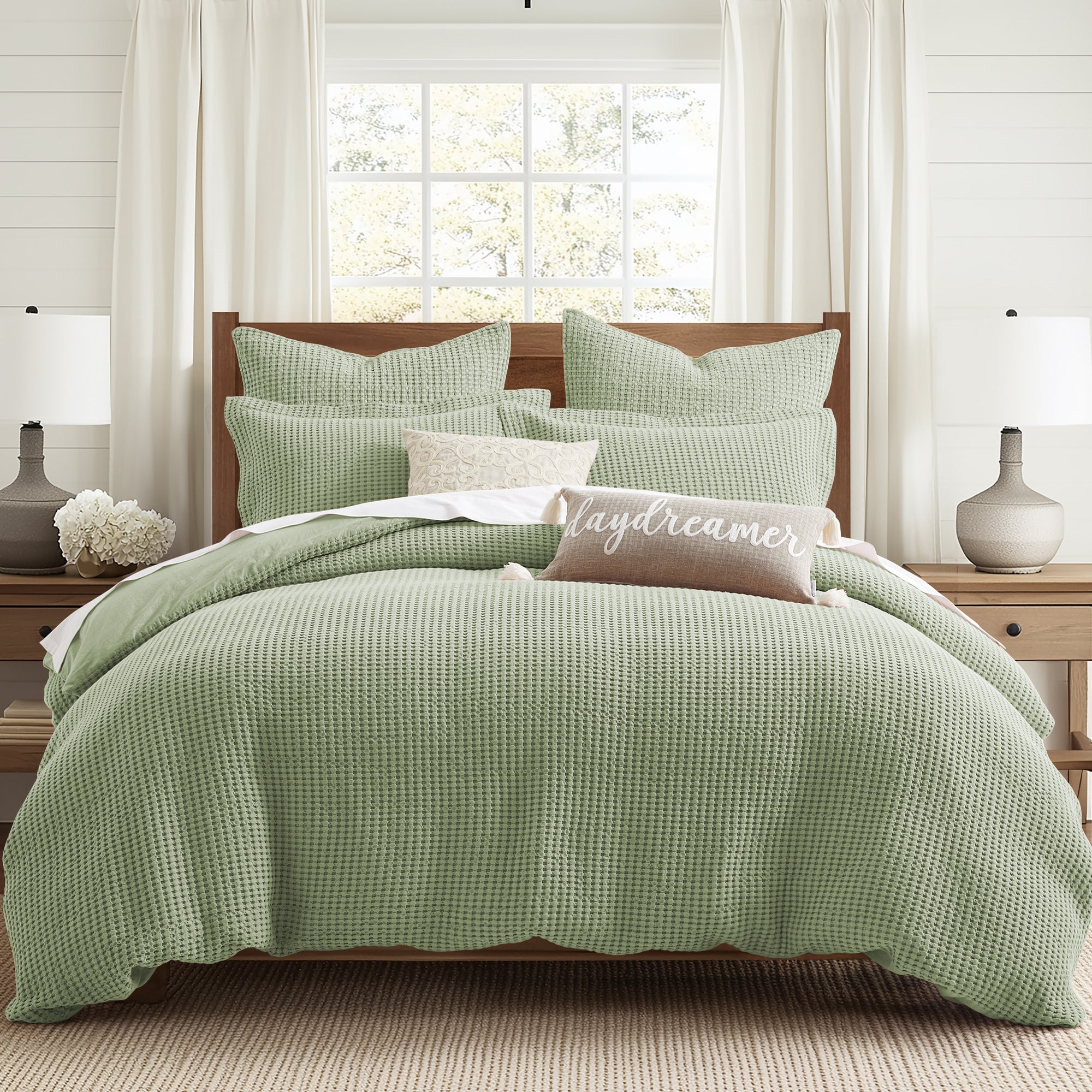
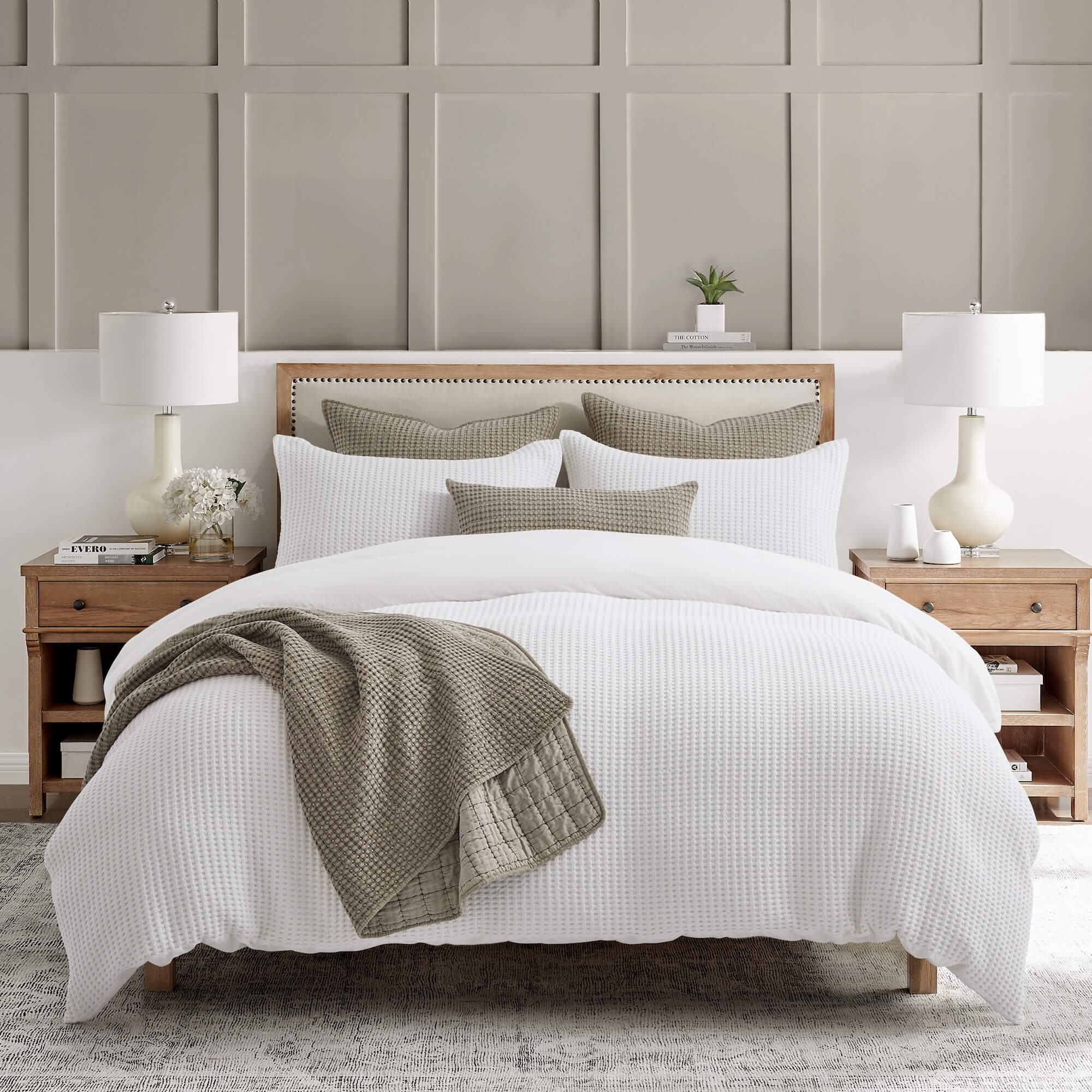
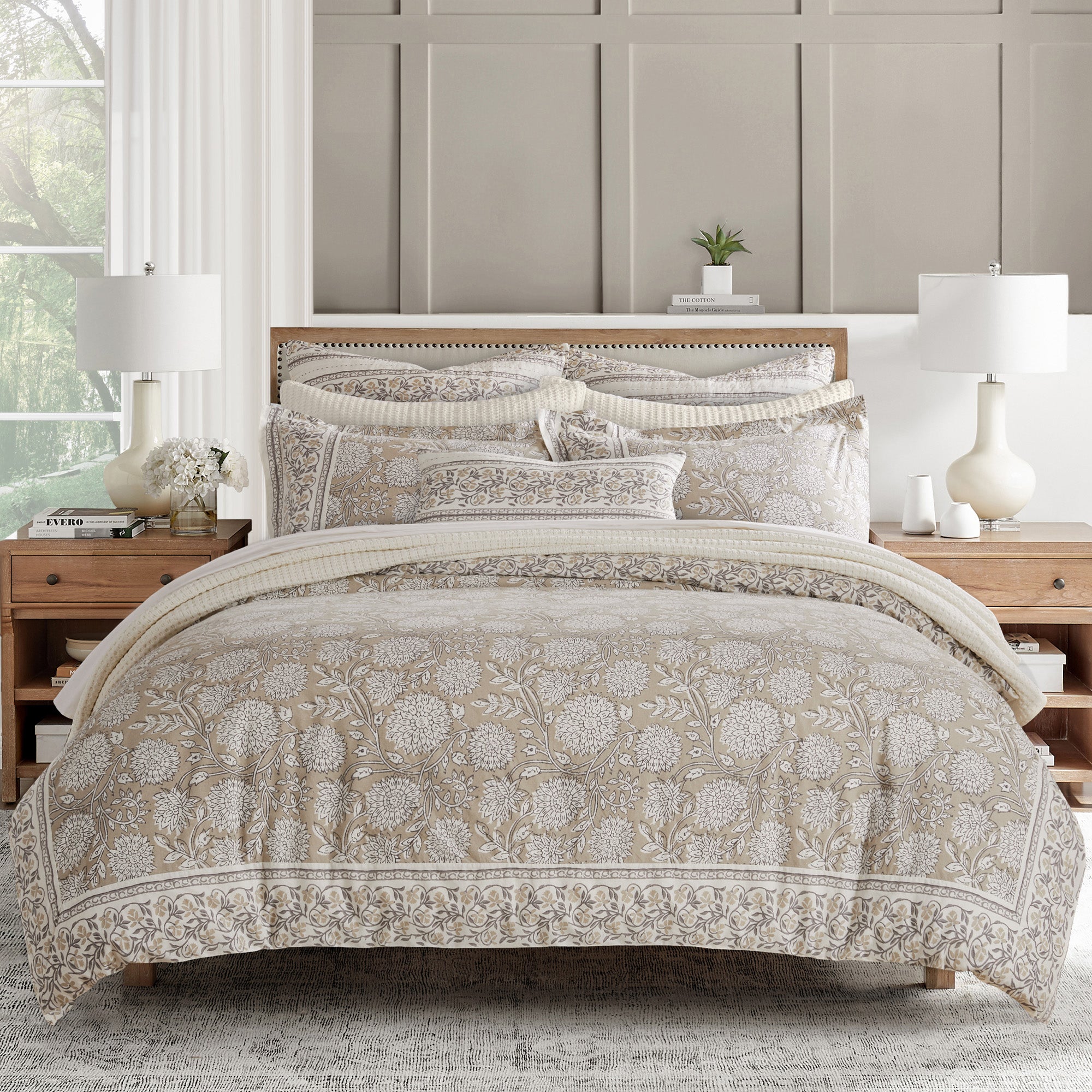
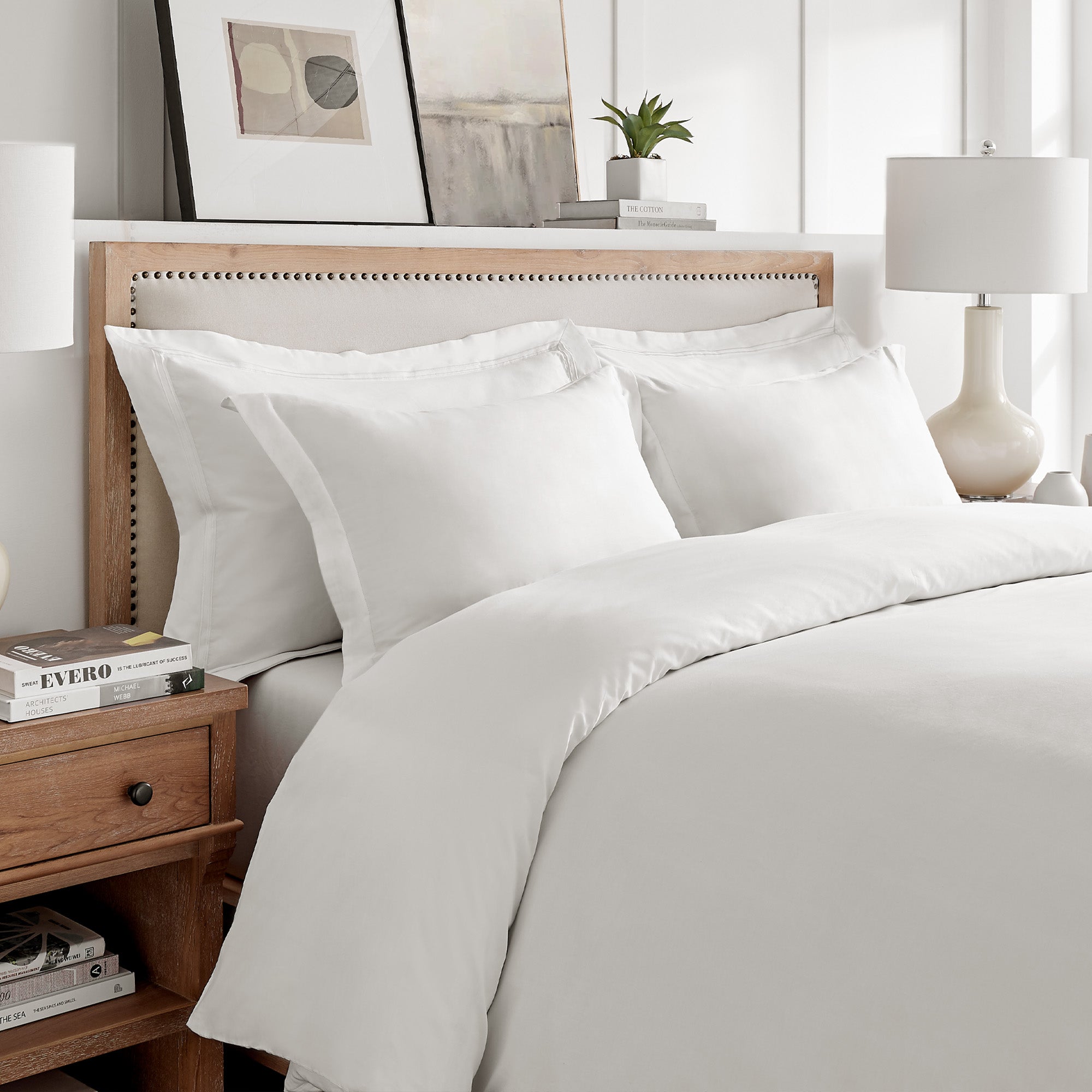
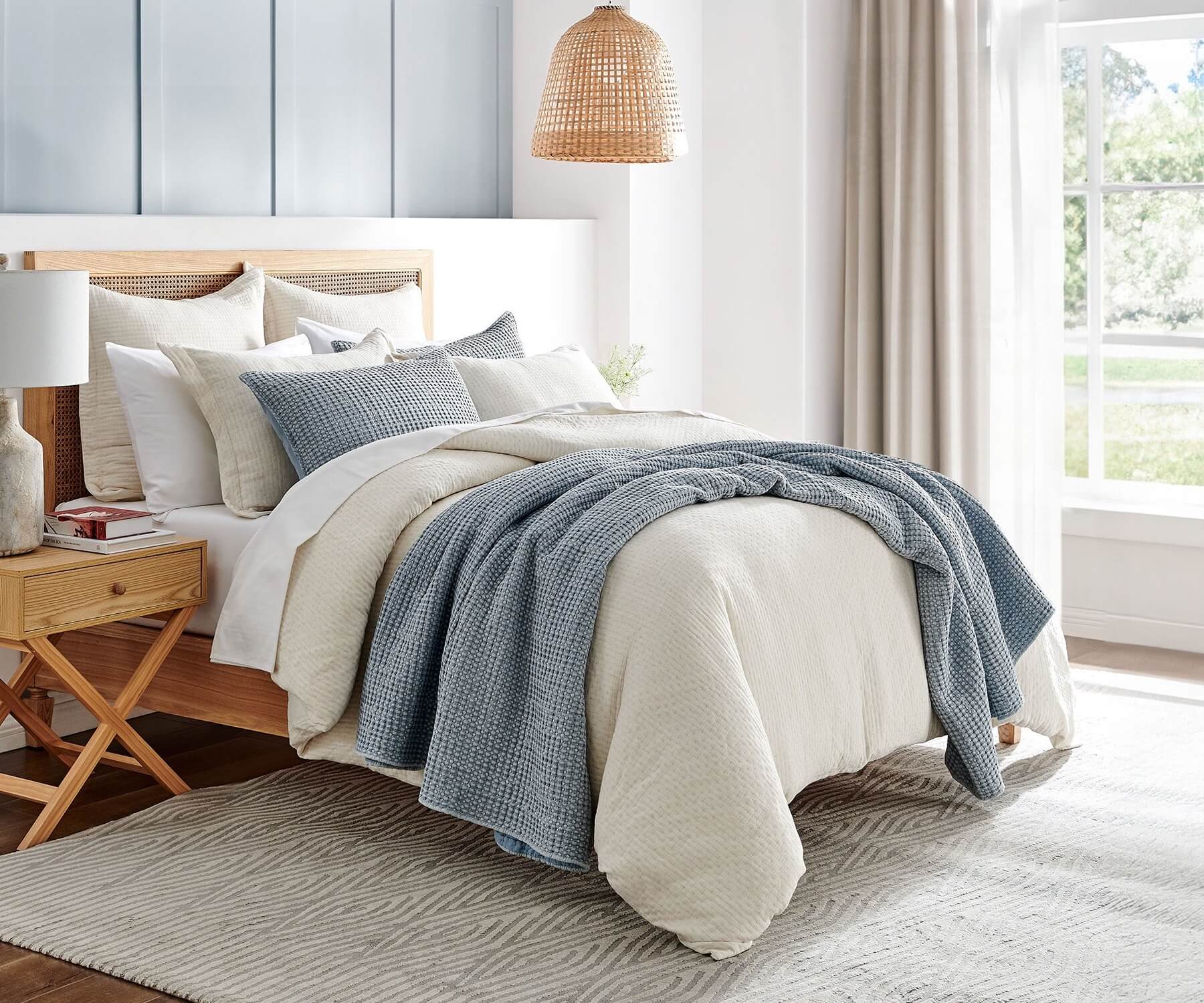
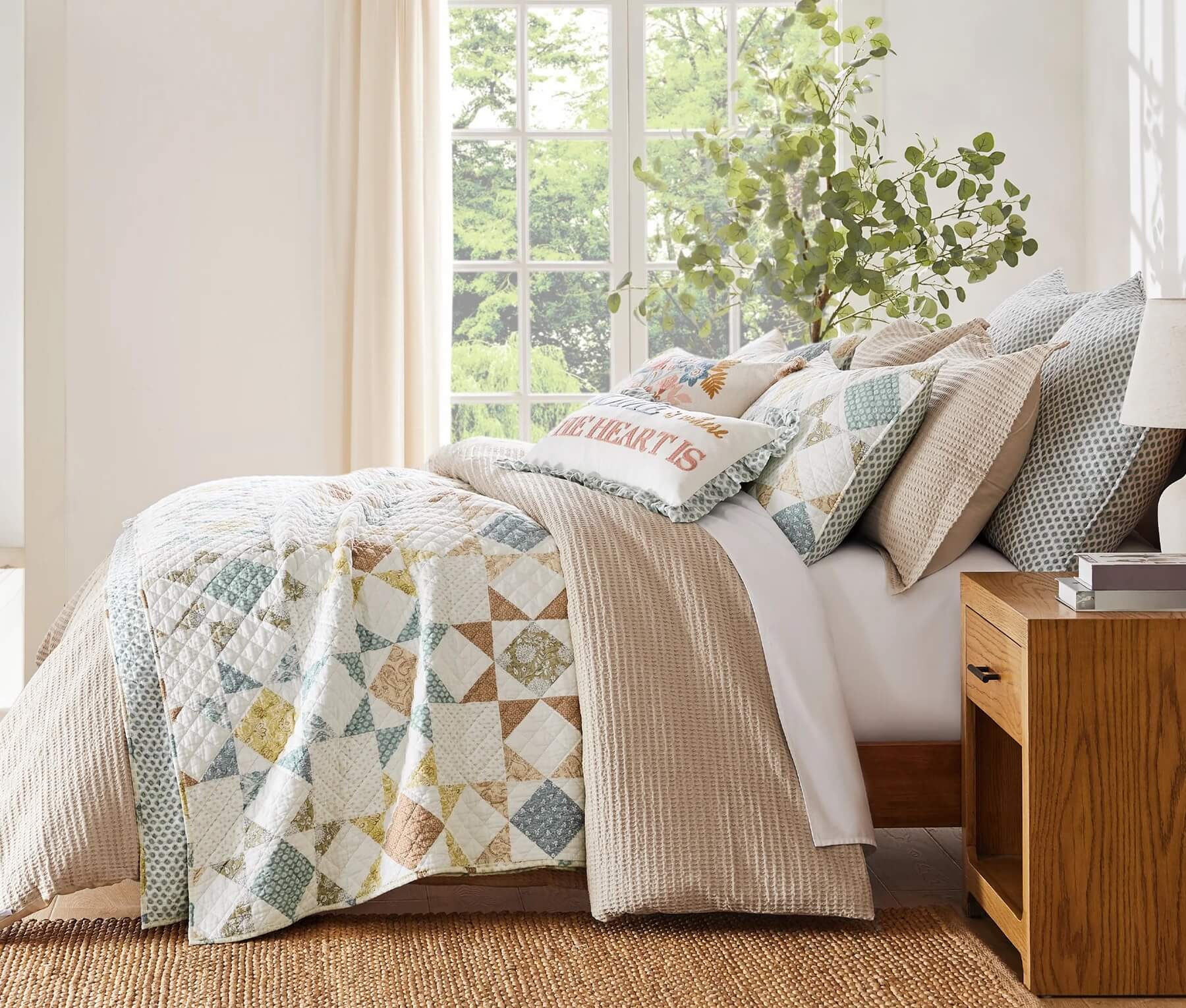
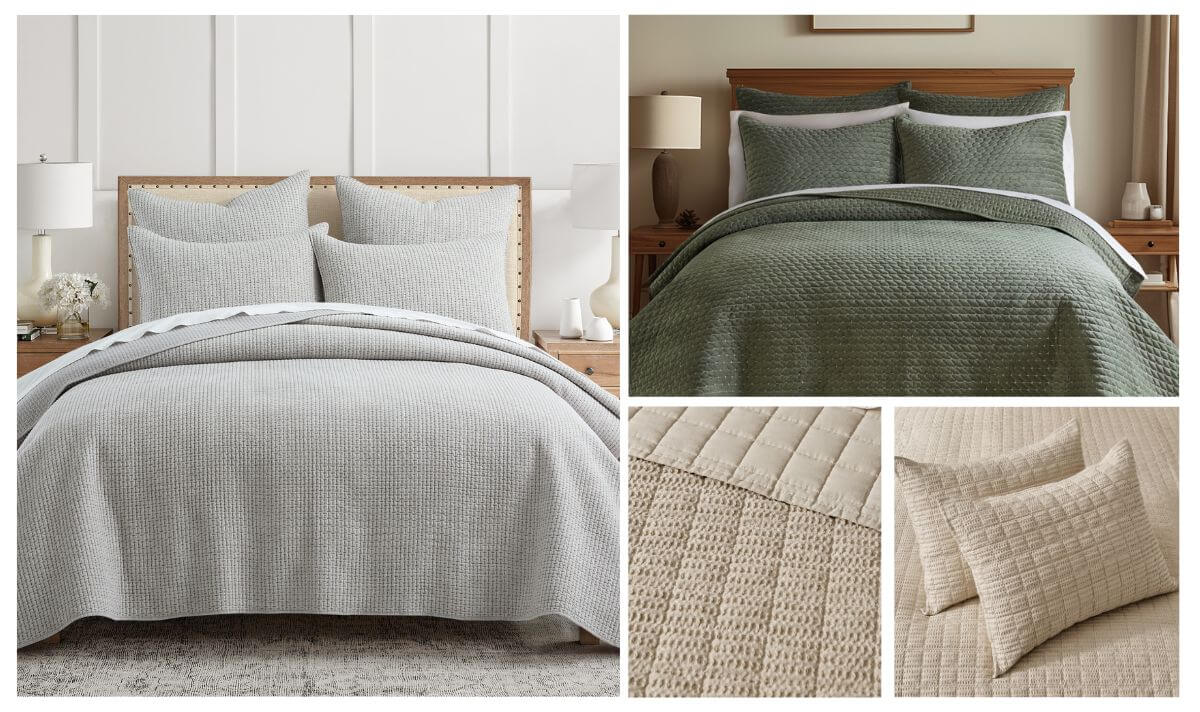
Start with texture before pattern. A quilt with visible stitching, a washed-looking coverlet, a slubby throw, or soft cotton layers in understated tones will do more for the mood of the room than a lot of decorative noise. This is where bedding and soft furnishings really matter. In a bedroom, especially, natural-looking layers help create the kind of ease Wabi Sabi is known for. That is one reason textured quilts, relaxed bedding, and tonal throws fit so naturally into this style.

Then think about materials that feel honest. Wood with grain. Ceramics that look handmade. Textiles that wrinkle a little. Surfaces that show depth instead of shine. This is not a style that wants everything to look brand-new and factory-perfect. It wants the room to feel touched by life.
It also helps to let the room feel collected, not decorated. A Wabi Sabi home usually has space around things. A few meaningful pieces. A stack of books. A ceramic bowl. A simple lamp. A bed layered with natural-looking textiles. The room should feel natural and comfortable, not staged for inspection.
Reintroduce the human touch into our spaces and lives.Architectural Digest, “Wabi-Sabi and Other Imperfectly Perfect Interior Styles in Practice”
That is a big part of what makes this style work. Handmade-looking details, natural texture, and relaxed layers do not just soften a room visually. They make it feel more human. More personal. More like somewhere you actually want to be.

The Spruce recommends focusing on asymmetry, simplicity, intimacy, and tactile materials when bringing a Wabi Sabi aesthetic into you home, which is exactly why subtle textiles and natural layers can do so much of the work. (3)
Wabi Sabi Room-by-Room Design Tips
Living Room
A Wabi Sabi living room should feel balanced, but not rigid. Keep furniture silhouettes simple. Add softness through textured pillows, throws, and a rug that grounds the room without calling too much attention to itself. Mix in wood, ceramics, woven pieces, and a few objects that feel personal or handmade. The point is not to fill every surface, it is to create a room that feels calm and intentional.
Bedroom
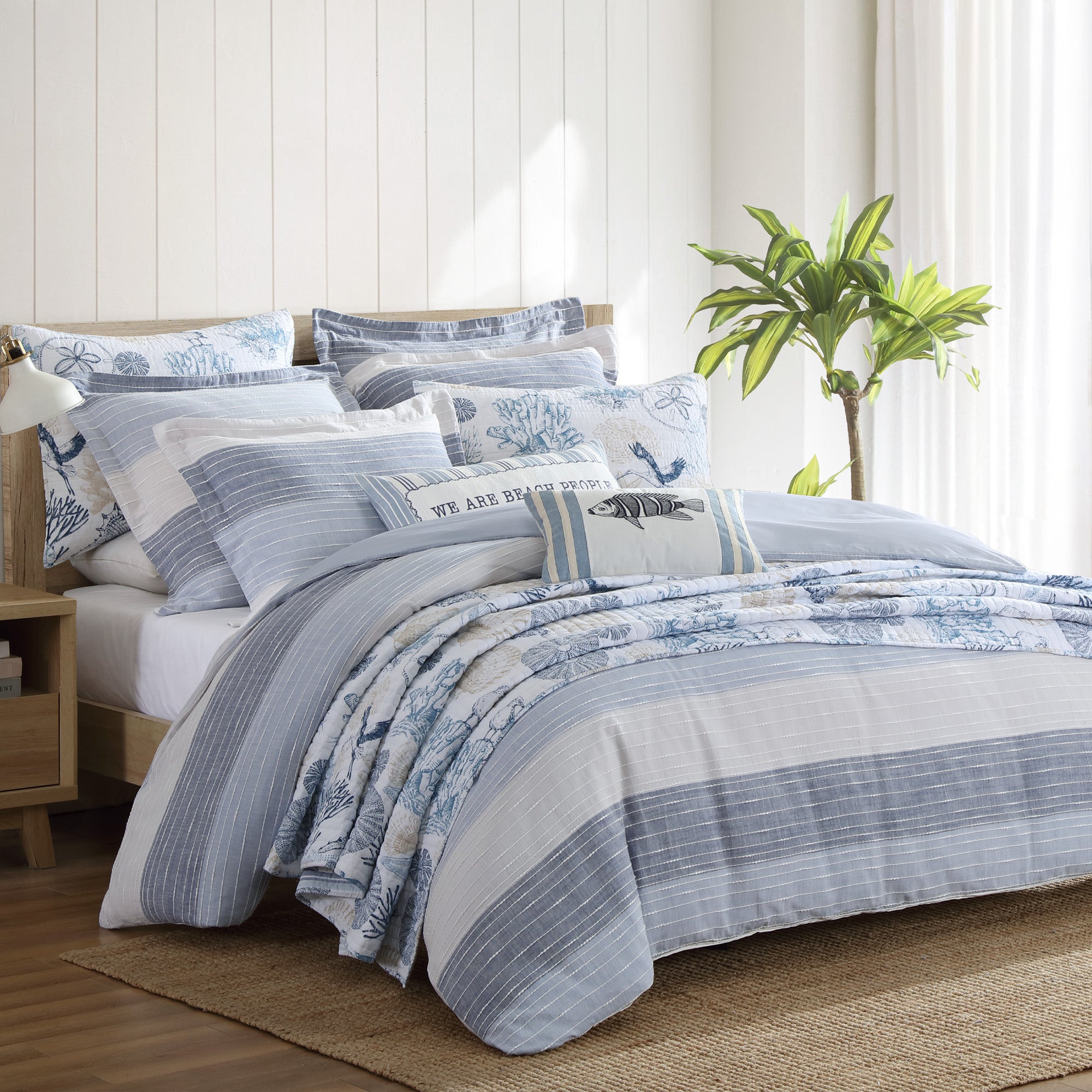
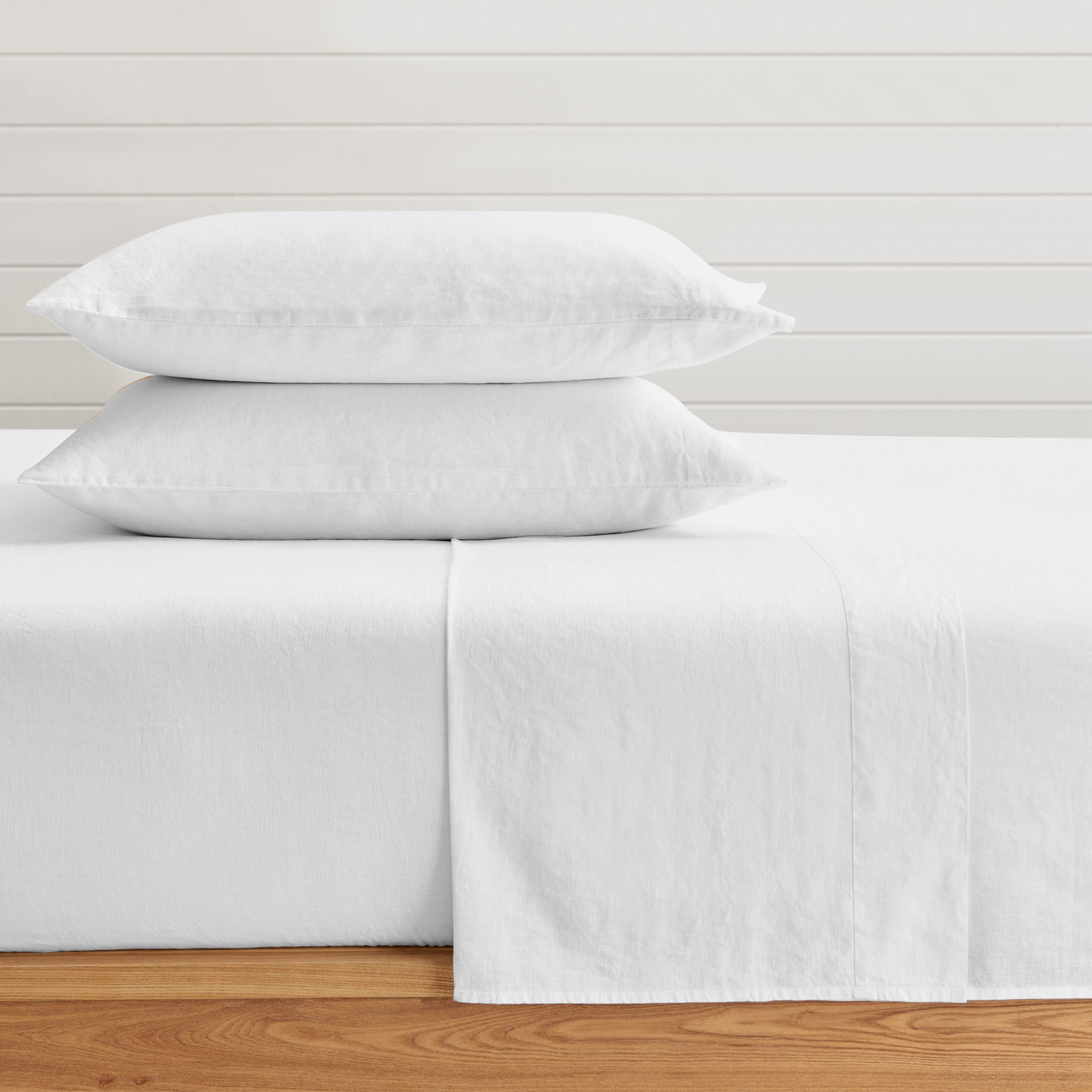
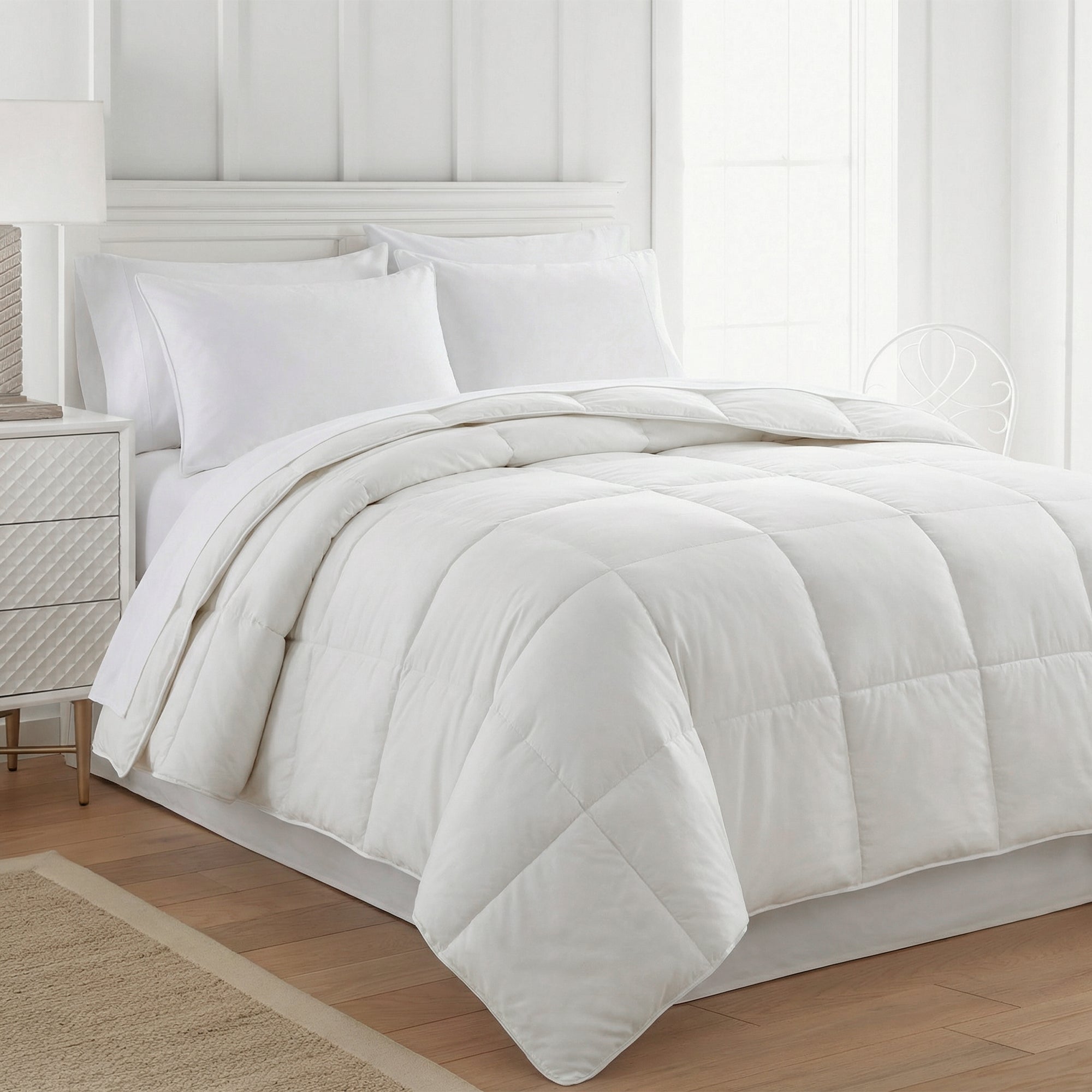
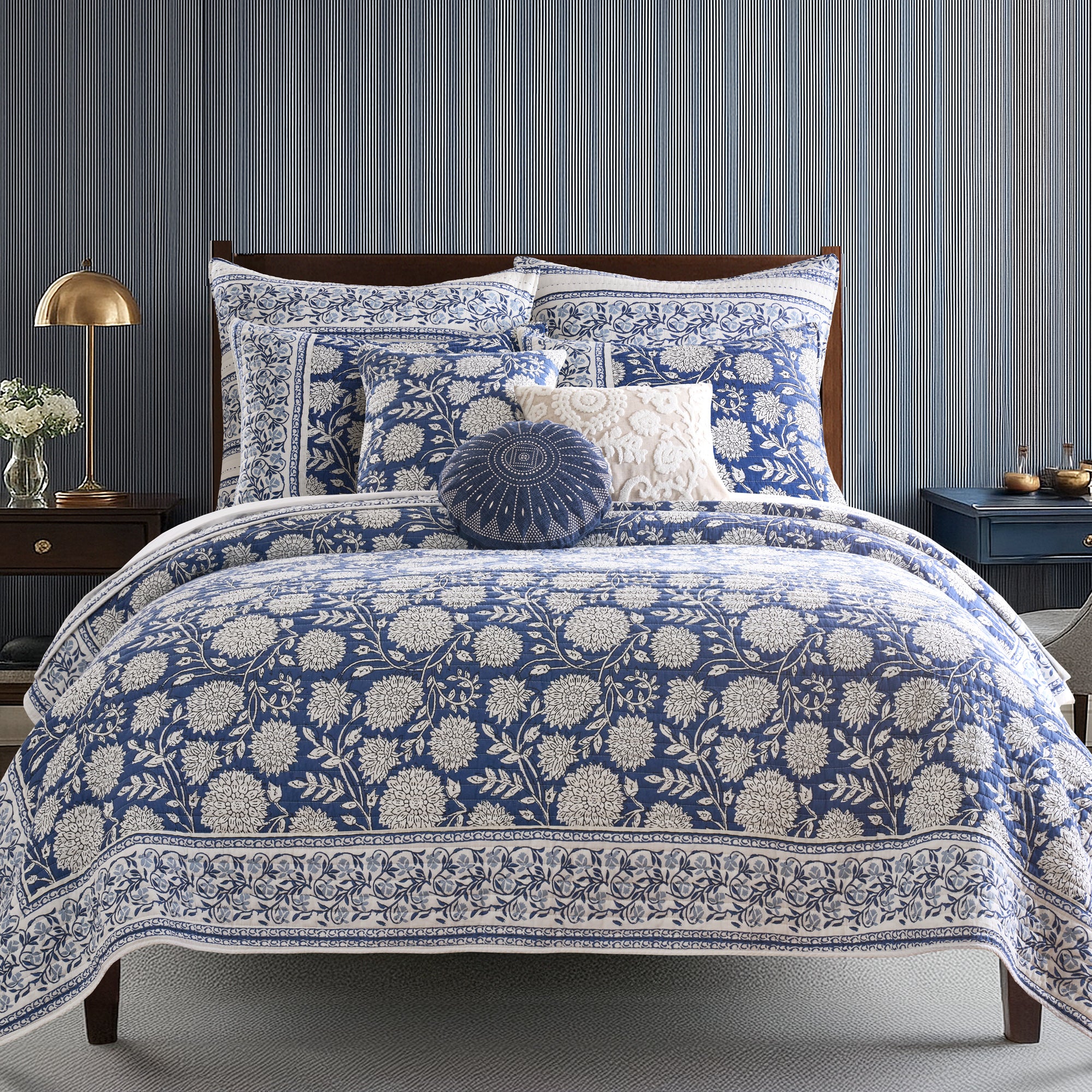
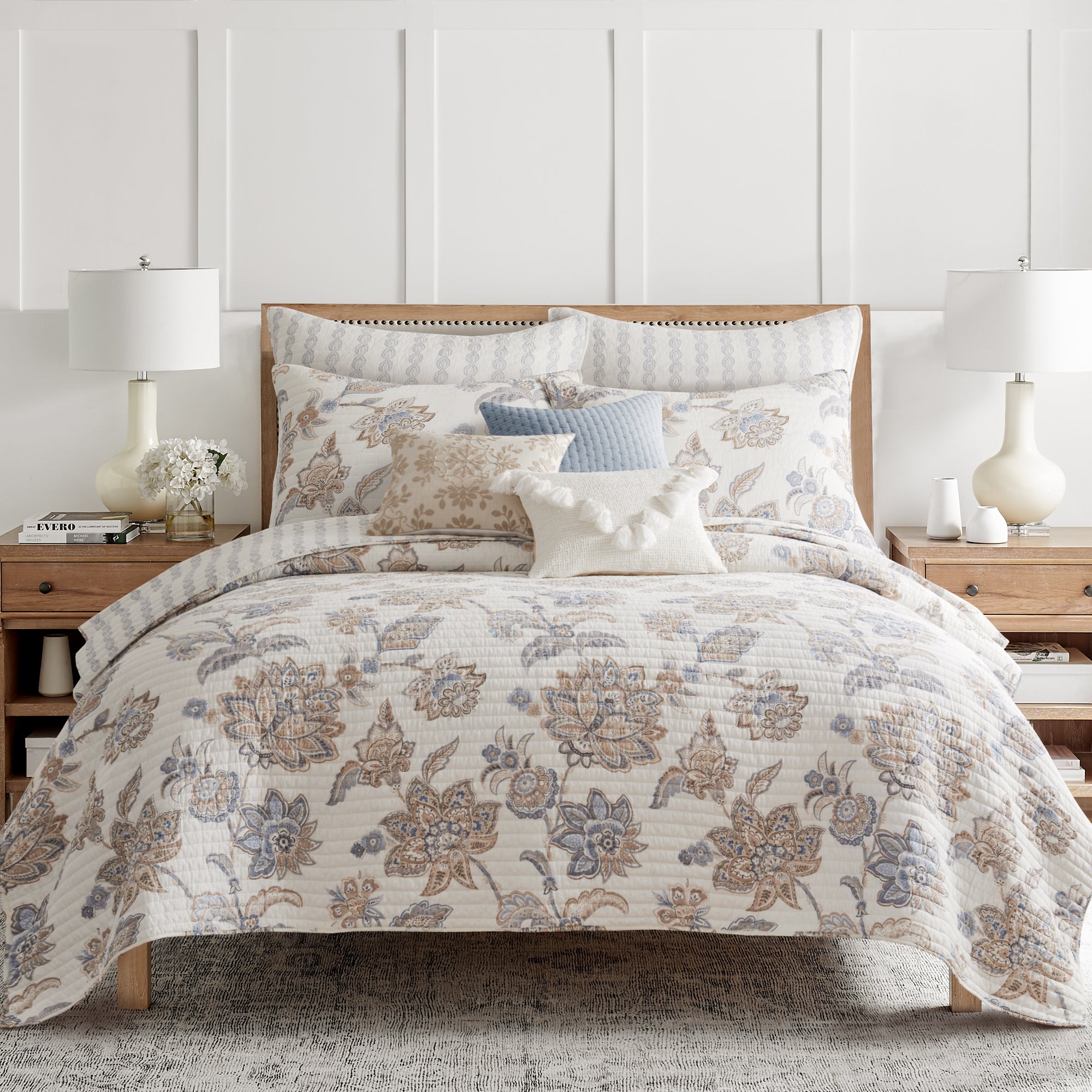
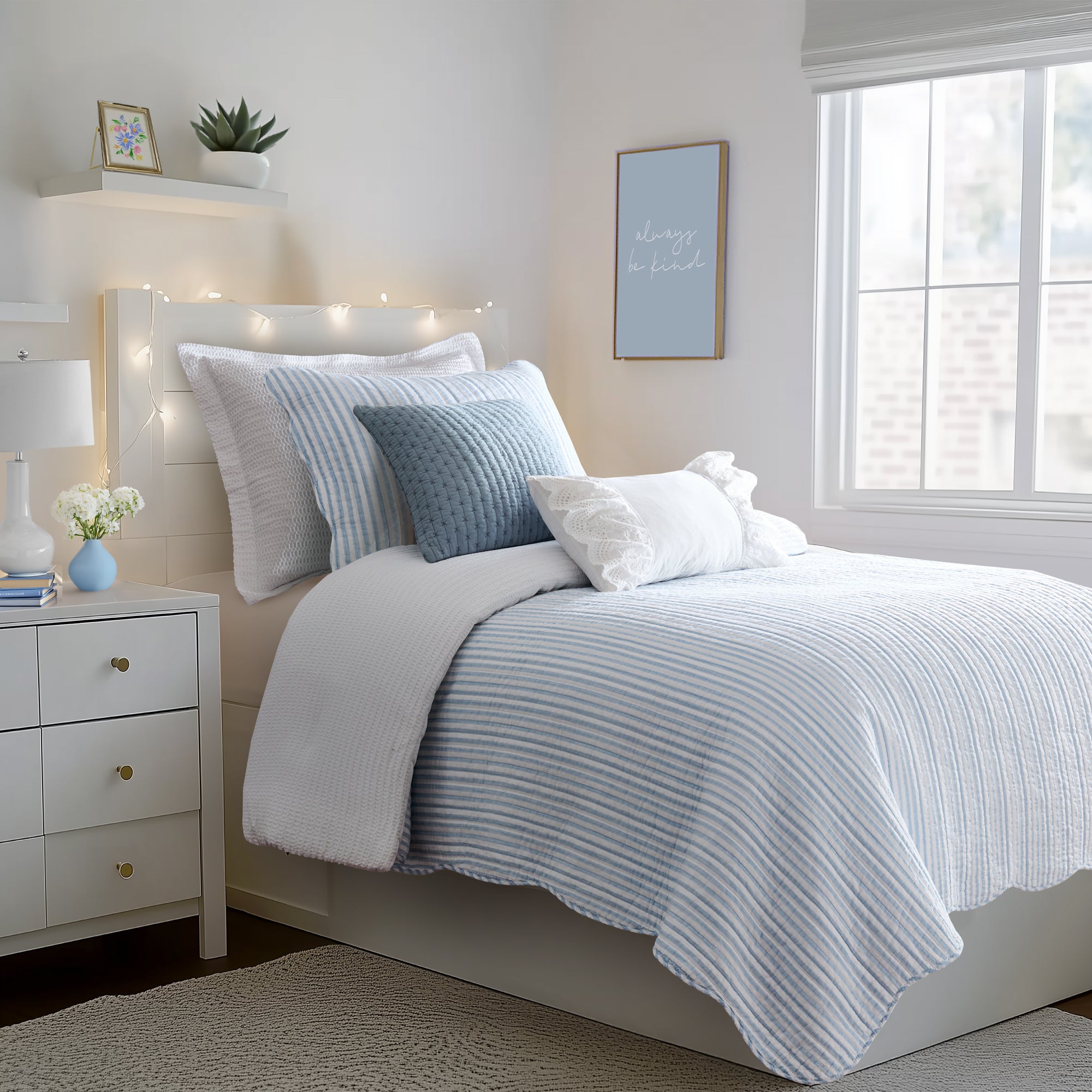
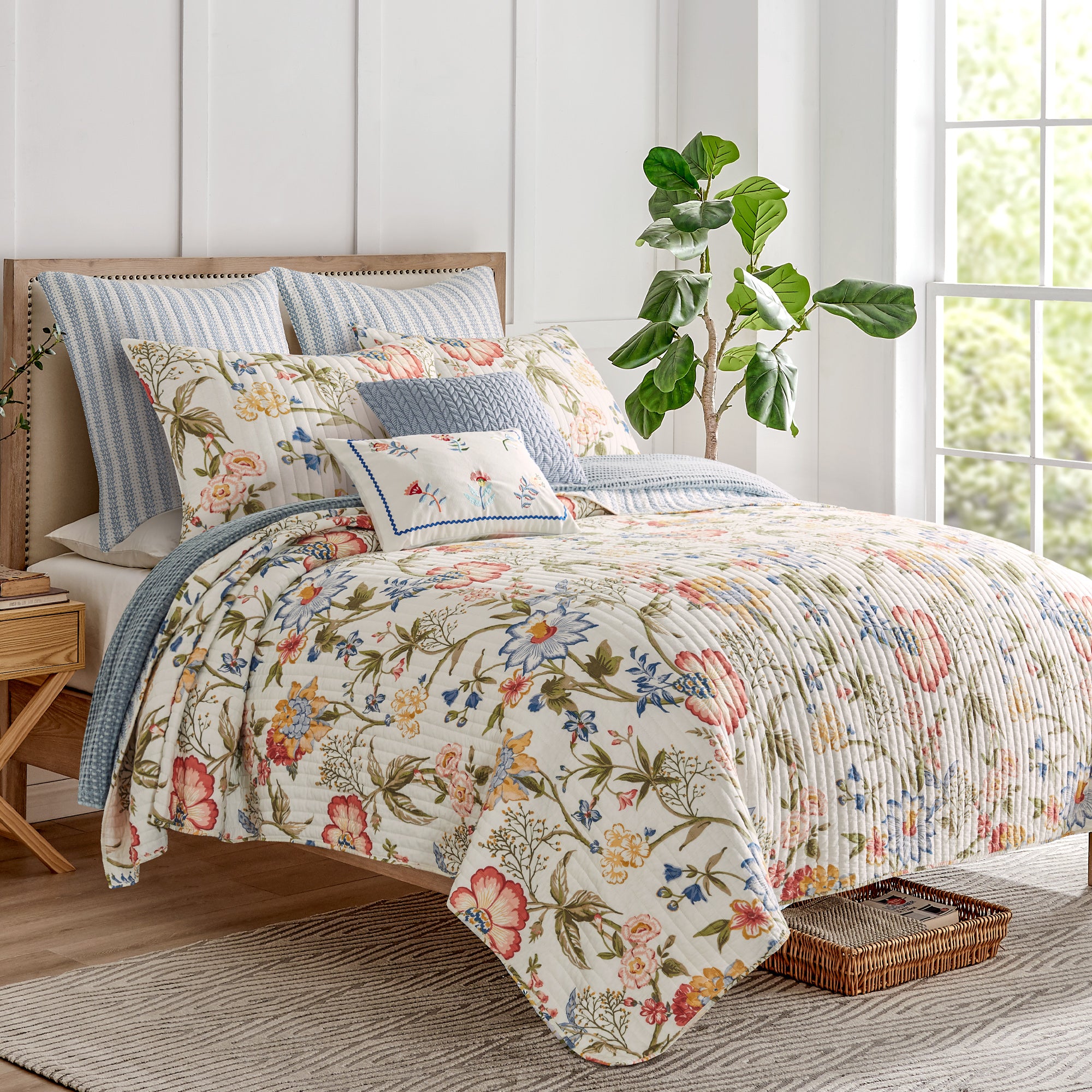
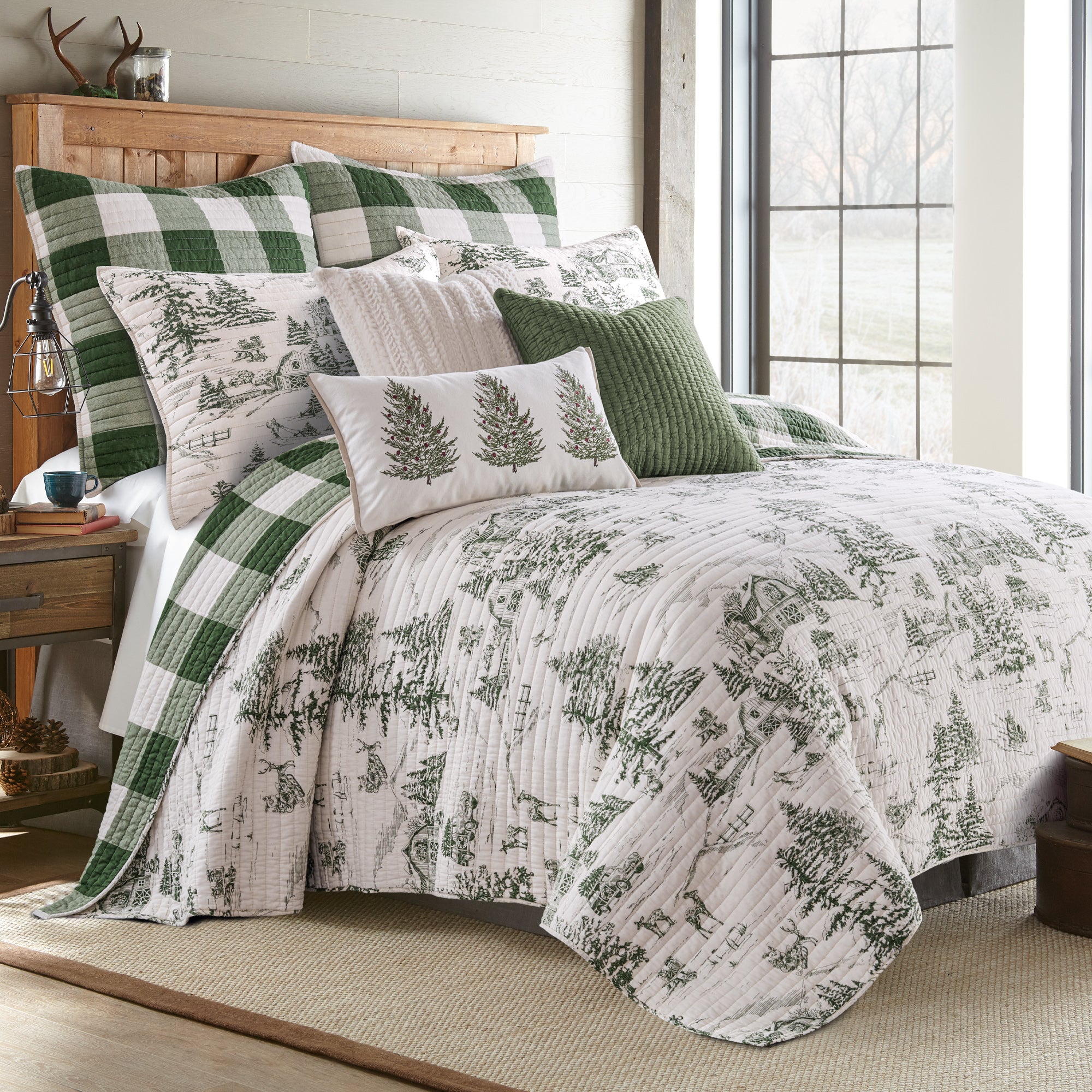
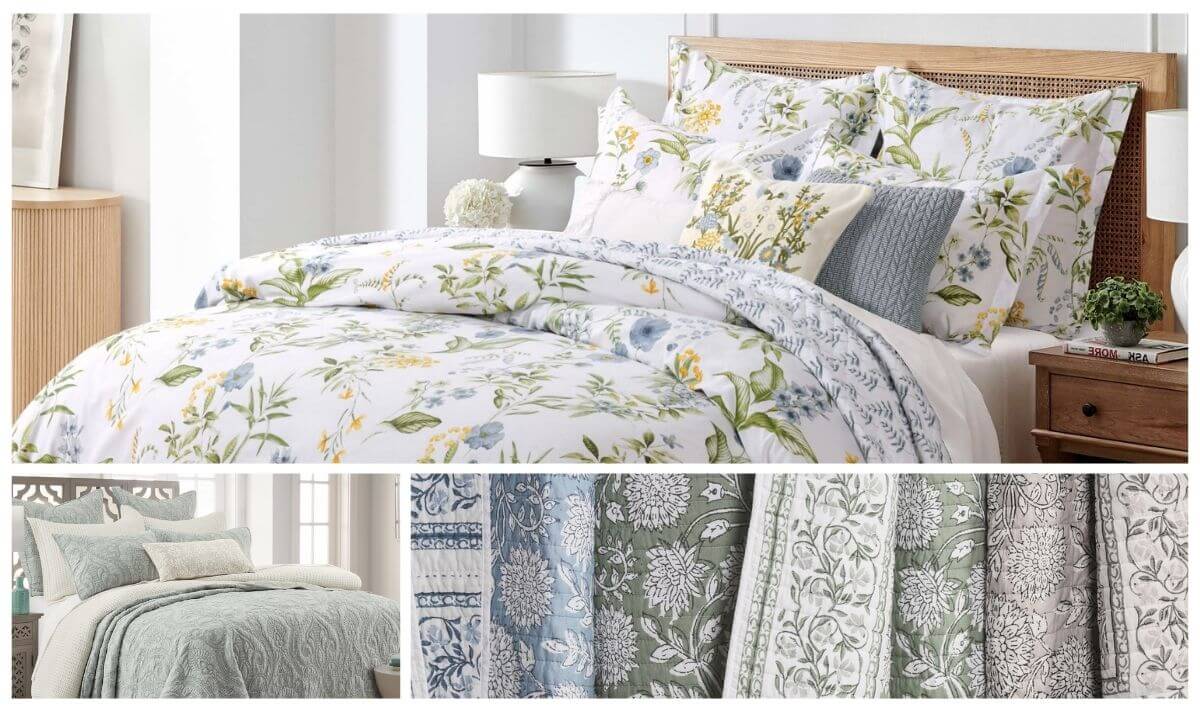
The bedroom is one of the easiest places to bring wabi sabi interior design to life. Start with a gentle palette. Layer natural-looking bedding in soft neutrals or earth tones. Choose quilts, coverlets, or throws with visible texture. Let cotton, linen, and relaxed finishes do the heavy lifting. The bed should feel inviting and unfussy, not stiff or over-accessorized. This is also where Levtex Home provides so many options that fit so well: textured bedding, understated layers, and soft tonal pieces can help create a room that feels serene, cozy, and imperfectly finished in the best way.

Kitchen and Dining Areas
In the kitchen or dining space, Wabi Sabi shows up through restraint and materials. Think linen runners, handmade ceramics, wood serving pieces, stoneware, open shelves with breathing room, and surfaces that do not need to look untouched to feel beautiful. It should feel useful and warm. Never fussy.
A Wabi Sabi room should feel calm, useful, and a little unforced. If it looks too perfect, it probably needs one less accessory and one more natural texture.
Better Homes & Gardens highlights organic shapes, muted tones, linen, wood, and clay as easy ways to bring a warmer, more approachable wabi-sabi look into a home. (4)
Decluttering and Curating for a Wabi Sabi Home
Wabi Sabi is not about stripping a room down until it has no personality. It is about editing with care. Keep what is useful, meaningful, or quietly beautiful. Let go of what feels purely decorative but adds noise instead of comfort. A room does not need a lot to feel finished when the pieces you keep have texture, purpose, and presence.
This idea matters in bedding, too. You do not need a dozen decorative pillows to make a bed feel complete. A textured quilt, a soft throw, natural-looking layers, and a couple of well-chosen accents can create a rich, deep, beautiful environment that exudes calm and is warm and inviting.
The Spruce notes that Wabi Sabi spaces benefit from meaningful objects and materials that age well, which makes the style feel personal rather than generic. (5)
Wabi Sabi vs. Minimalism vs. Japandi
This is where people get tripped up. Wabi Sabi shares some visual overlap with both minimalism and Japandi, but it is not the same thing.
Minimalism often aims for clarity, control, and reduction. Wabi Sabi is softer. It leaves more room for irregularity, wear, and emotional warmth. It is less about precision and more about presence.
Japandi combines Japanese and Scandinavian influences, so it can share the neutral palette and natural materials. But Japandi usually feels more streamlined and polished. Wabi Sabi is generally more organic, weathered, and relaxed. It has a little more soul, a little less symmetry, and a lot less pressure to look perfect.
That distinction matters. If you choose to decorate in the Wabi Sabi style, you should not feel like you need a museum-clean room. What you are aiming for is a room that feels calm, intentional, beautiful, but ultimately, and most importantly, lived in.
Why Wabi Sabi Still Feels Timeless
The reason Wabi Sabi endures is simple. It makes a home feel human.
Instead of chasing perfection or trend, it leans into comfort, texture, and character. It welcomes the pieces that feel collected over time rather than bought to match all at once. A rumpled throw, a weathered wood table, a handmade bowl, a bed layered in soft natural tones. These details do not feel dated because they are rooted in atmosphere, not performance. Wabi Sabi lasts because it reflects the way people actually want to live: calmly, comfortably, and with a little room for life to show.
In that way, Wabi Sabi is not really about imperfection for the sake of it. It is about allowing beauty to feel real. That is what makes it timeless.
Wabi Sabi is not about buying a perfect room. It is about creating a home that feels honest, calm, and beautifully lived in.
Bringing Wabi Sabi Home with Levtex
One of the reasons wabi sabi interior design resonates so deeply is that it feels achievable. It is not rigid. It is not overly styled. It is about choosing pieces with quiet presence and letting the room unfold from there.
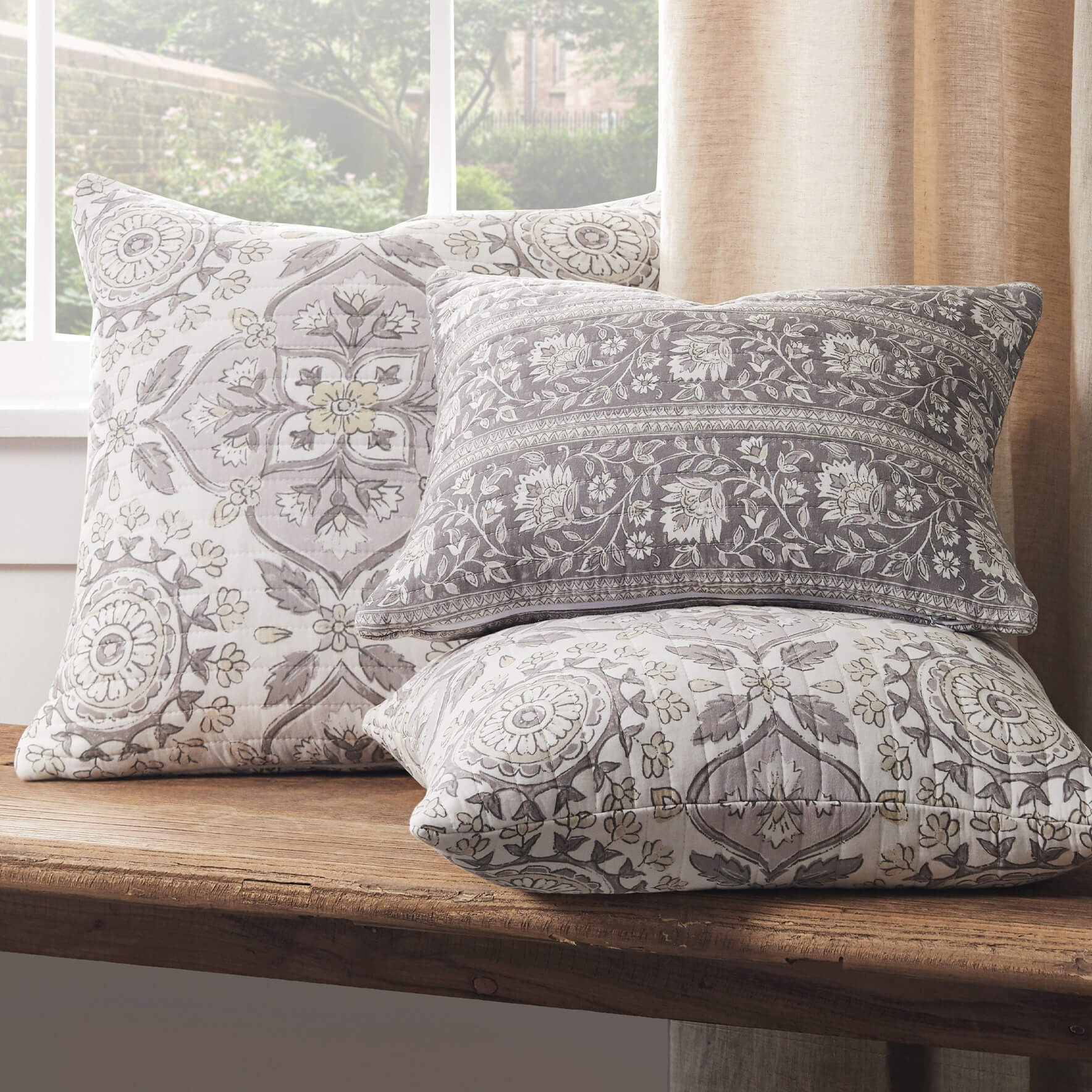
Start with softness. Build in texture. Keep the palette grounded and the overall feeling uncluttered. In the bedroom, that might mean tonal bedding, a textured quilt, a relaxed throw, and a few understated accents that create a sense of ease. In the living room, it could be layered pillows and soft textiles that bring warmth and depth without making the space feel busy. The effect is subtle, but that is the point.
That is why this aesthetic pairs so naturally with Levtex. The brand’s quilts, bedding, throws, and decor help create spaces that feel comfortable, textural, understated, and full of quiet character.
Frequently Asked Questions
What is the Wabi Sabi rule?
There is not one formal “rule,” but the core idea is to appreciate imperfection, simplicity, and the natural passage of time in the things you bring into your home.
What are the colors of a Wabi Sabi interior?
Wabi Sabi interiors usually use earthy, muted colors like soft white, taupe, sand, clay, weathered brown, warm gray, and muted green.
What is the concept of Wabi Sabi?
The concept centers on finding beauty in imperfection, impermanence, and authenticity rather than perfection or excess.
What is the difference between Wabi Sabi and minimalism?
Minimalism usually leans cleaner and more controlled. Wabi sabi allows more warmth, irregularity, texture, and visible life in a space.
What is the difference between Wabi Sabi and Japandi?
Japandi tends to be more streamlined and polished. Wabi sabi is more organic, weathered, and imperfect in a softer, more relaxed way.
References
1. Wabi-Sabi and Other Imperfectly Perfect Interior Styles in Practice,
Architectural Digest
2. What Is Wabi Sabi Interior Design?,
House Beautiful
3. What Is Wabi Sabi Interior Design? How to Use It at Home,
The Spruce
4. An Interior Designer Convinced Me to Try Wabi-Sabi Interior Design by Only Shopping at Amazon
Better Homes & Gardens